
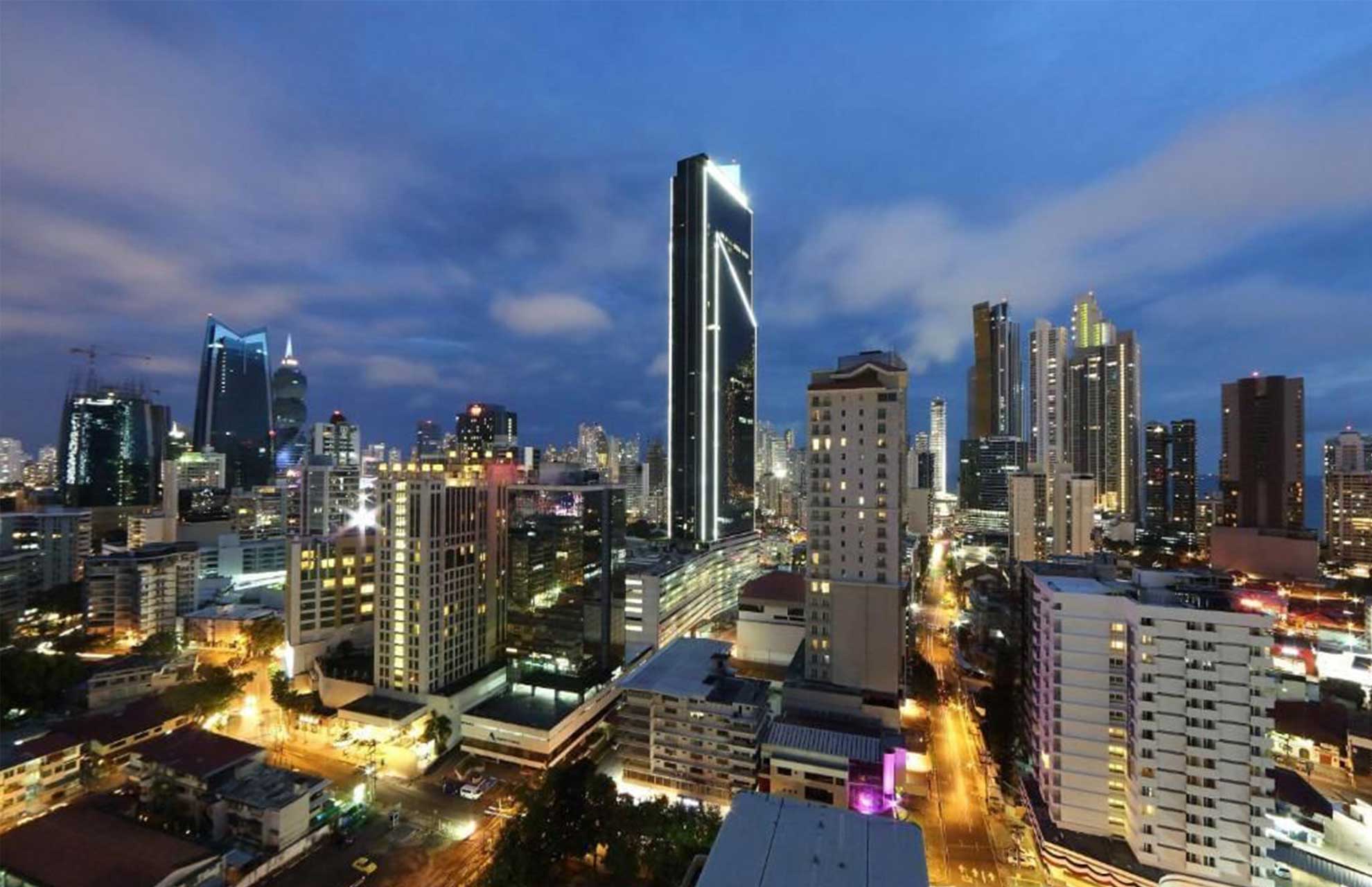
I first visited Panama City fifteen years ago to meet with banking officials and registered agents. I stepped off the plane expecting a tropical backwater. Instead, I saw a skyline that rivals Dubai or Singapore.
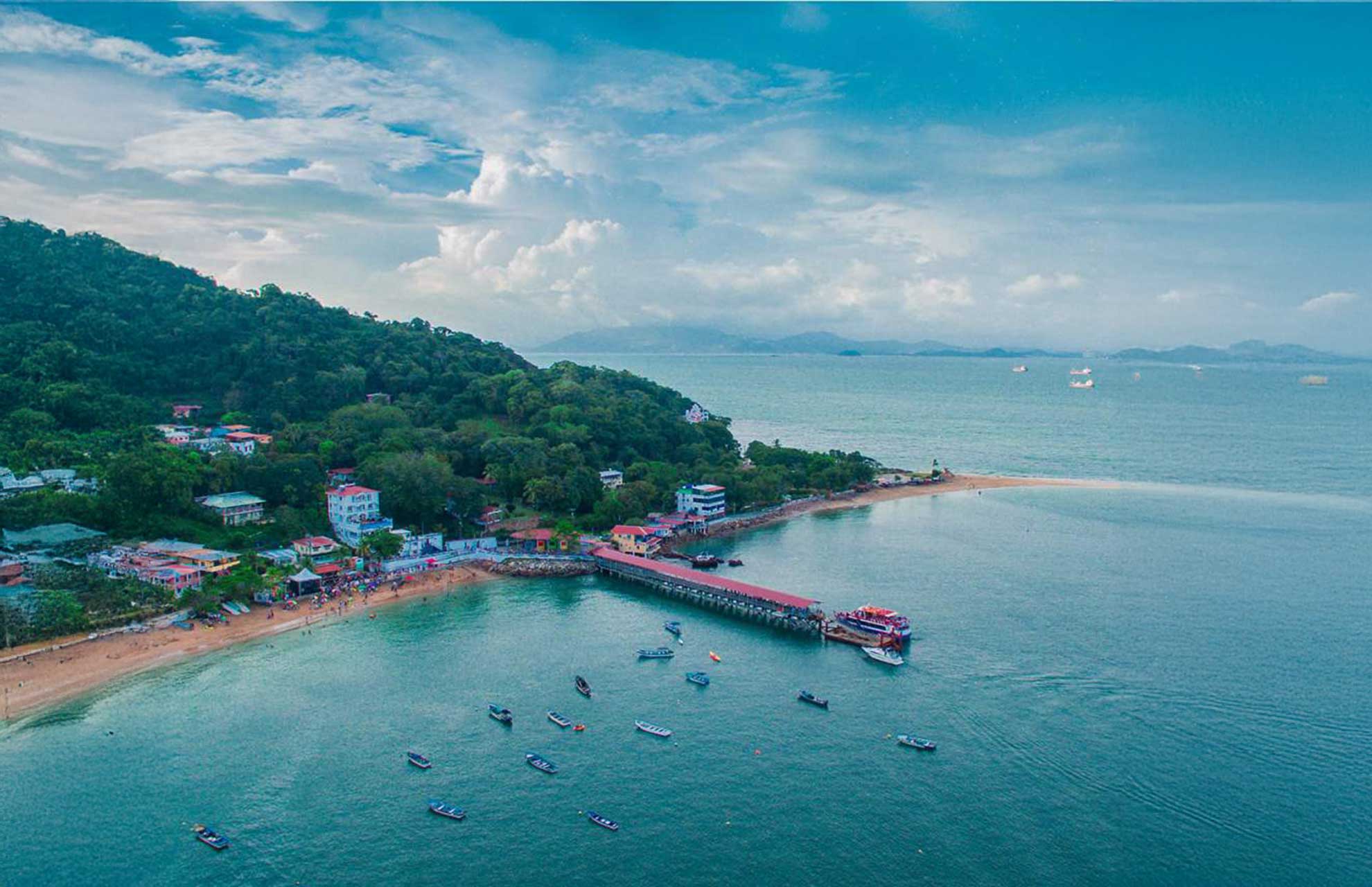
Panama City is much more than the country's capital. You can pedal in front of a skyline with some of the tallest skyscrapers in Latin America. You can enjoy the Pacific breeze as you ride along the Bay of Panama. You can walk among archaeological sites and trails. You can see how colonial history and the night come alive in the same place. Panama City is a high contrast destination where greenery, indigenous peoples, and vibrant city life exist together.
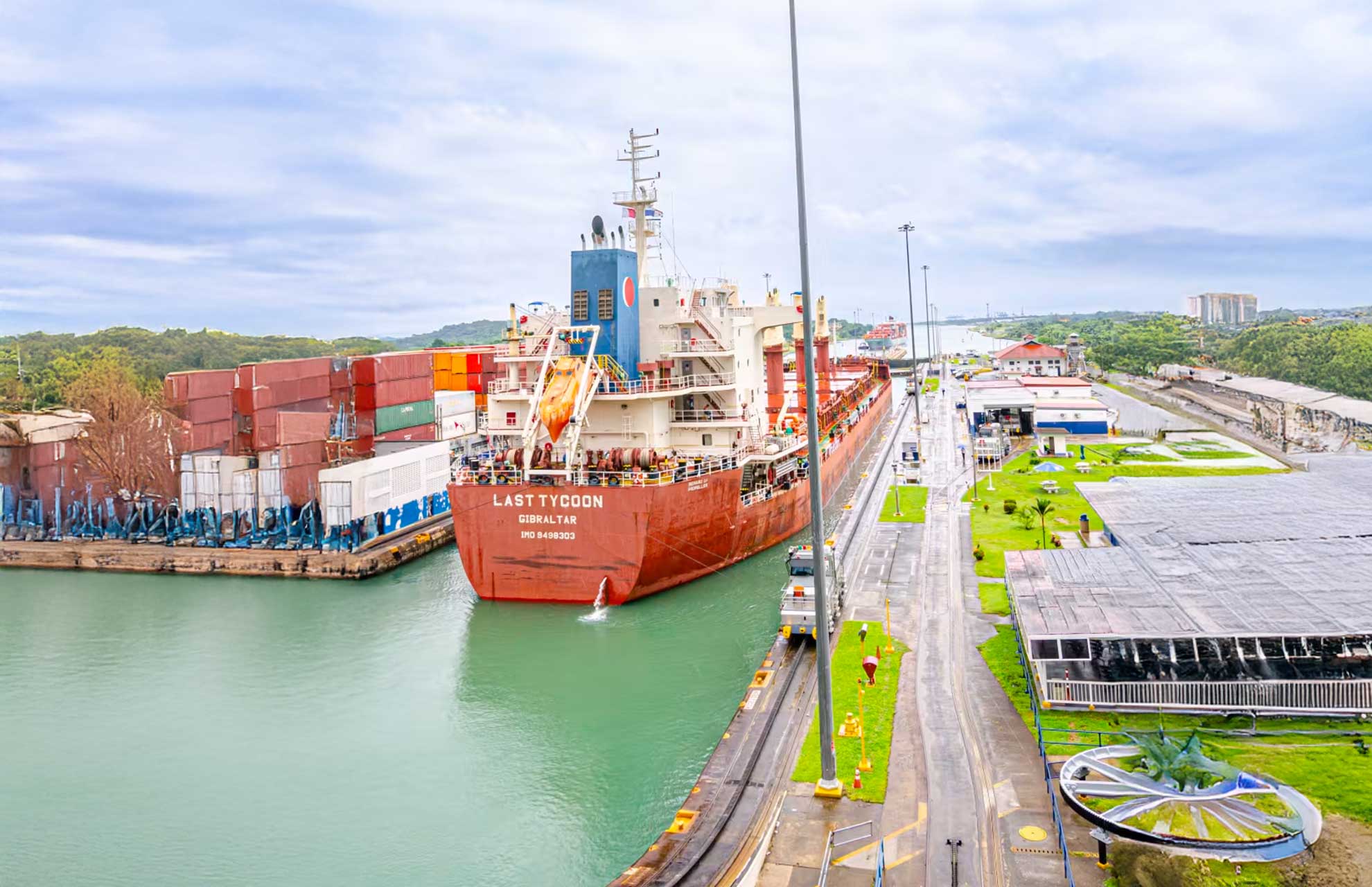
The Panama Canal is a twentieth century mega engineering feat that amazes every visitor. On your next trip, tour the Canal and its basin to discover its important economic, cultural, and environmental impact. You can participate in all kinds of tours and activities to explore every facet. The Canal is a manmade wonder that transformed global shipping.
The city actually contains three cities in one. Its buildings portray it as a modern financial center. But it also holds two historic cities, both declared World Heritage Sites by UNESCO. The oldest is Panama Viejo, an archaeological site preserving the ruins of the first city founded in 1519 and destroyed by pirates in 1671. The other is Casco Antiguo, a walled colonial city full of color, history, and flavor. Walk around its streets and you will find museums, boutique hotels, rooftop bars, and the best restaurants in Central America.
In 2016, the leak of 11.5 million documents from Mossack Fonseca law firm exposed how Panama structures were used for tax evasion, money laundering, and sanctions violations by politicians and criminals worldwide. The scandal damaged Panama's reputation permanently. But it also forced reforms. Bearer shares were abolished. Transparency increased. Banking compliance tightened. Today's Panama is not the wild west offshore haven of 2015. The legitimate uses remain. The abuse is harder.
I have formed Panama corporations for clients seeking territorial tax treatment. I have watched Panama evolve from pure offshore secrecy to increased transparency. The Panama Papers changed everything. Let me show you what Panama offers today for international business in this post scandal environment.
- Panama Overview: Geography and Economy
- Tax Highlights: Territorial System Explained
- For Non Residents: Formation and Benefits
- Political Stability and Business Environment
- Banking in Panama: Reality Check
- Known Companies and Real Examples
- Route to US Stock Market
- When to Choose Panama
- How 1Stop Connect Helps
🌎 Panama Overview: Geography and Economy
Panama is a Central American country of 4.4 million people. It connects North and South America. The Panama Canal is one of the most important shipping routes in the world. Over 14,000 ships transit annually.
The economy is services based. Shipping, banking, and trade dominate. GDP is approximately $76 billion.
The US dollar is the official currency. Panama stopped printing its own paper money decades ago. The Panamanian balboa exists only as coins equal to the dollar. This eliminates currency risk and provides monetary stability.
Panama City is the financial hub. Over 70 international banks operate there. The banking center serves Latin America and increasingly global clients. The skyline rivals Miami with modern skyscrapers housing financial institutions.
Why Panama Became an Offshore Center
Panama's offshore industry started in the early 1900s. The country needed to attract foreign capital for canal construction and maintenance. It created favorable laws for international business.
Key attractions developed over time. Territorial taxation meant foreign income was not taxed. Banking secrecy protected client privacy. The US dollar provided currency stability. Proximity to the United States made it convenient.
By the 1980s and 1990s, Panama was a major offshore center. Thousands of international business companies (IBCs) formed annually. Law firms specialized in quick incorporations. Bearer shares allowed complete anonymity.
The reputation was not entirely positive. Panama appeared on various grey lists. The country faced pressure to increase transparency. Banking secrecy decreased. Bearer shares were abolished in 2015. Common Reporting Standard (CRS) came into effect in 2023.
Today Panama is more transparent but still offers advantages for legitimate structures. The territorial tax system remains. Privacy exists but is not absolute. Banking continues but with stricter compliance.
💰 Tax Highlights: Territorial System Explained
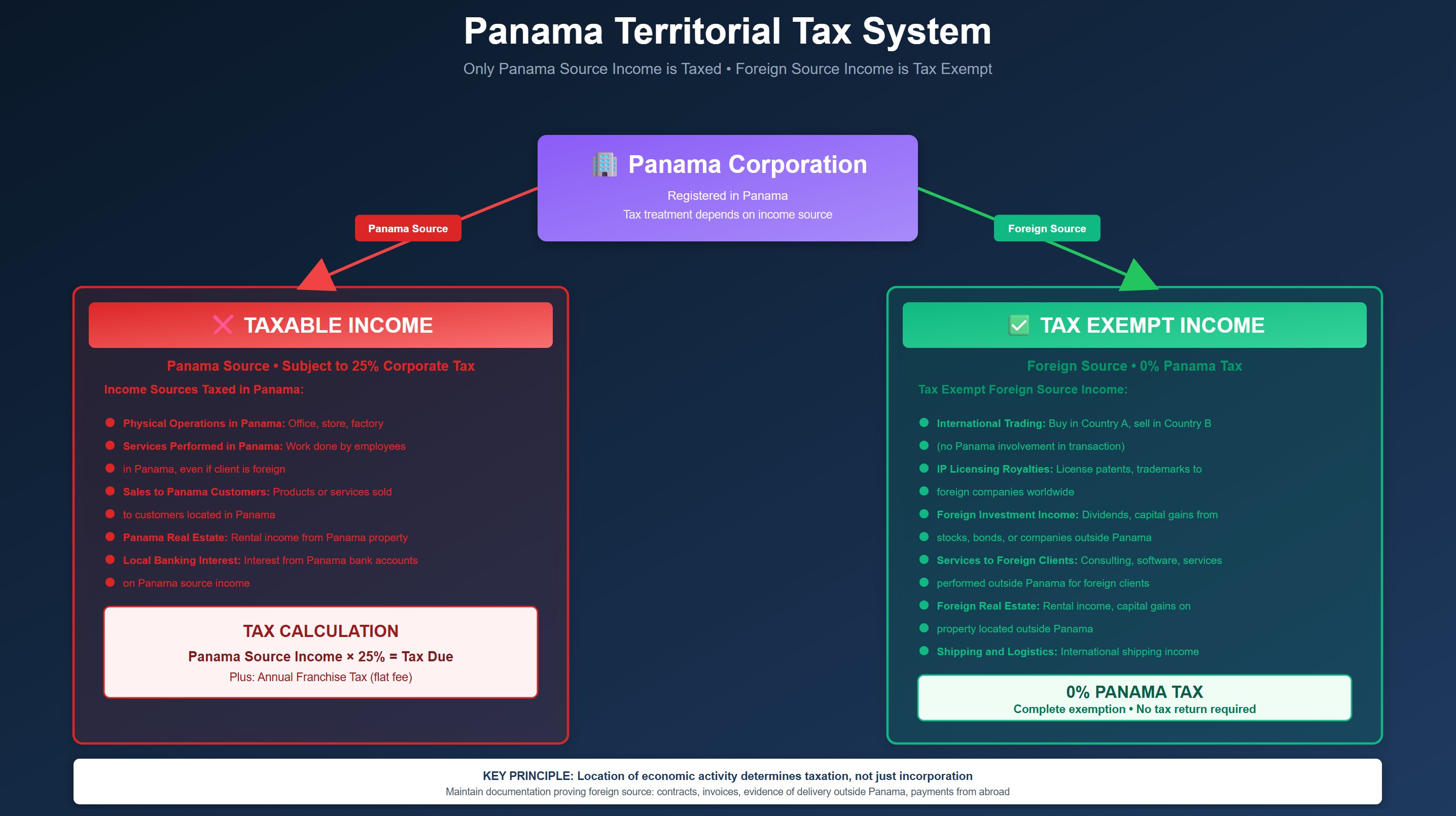
Panama uses territorial taxation. Only income sourced in Panama is taxed. Income sourced outside Panama is completely tax exempt.
This is the primary reason international businesses use Panama corporations.
What Is Territorial Taxation?
Most countries tax worldwide income. If you are a resident or your company is incorporated there, you pay tax on all income regardless of where it was earned.
Panama works differently. A Panama corporation conducting business entirely outside Panama pays zero Panama income tax. The source of income determines taxation, not just incorporation location.
Examples of Foreign Source Income (Tax Exempt)
International Trading: A Panama corporation buys products in China and sells them to customers in Europe. All transactions occur outside Panama. No Panama tax.
Intellectual Property Licensing: A Panama corporation owns a patent. It licenses the patent to companies in various countries. Royalty income is foreign source. No Panama tax.
Investment Holdings: A Panama corporation holds shares in companies in Asia, Europe, and North America. Dividends and capital gains from these foreign investments are tax exempt.
Services to Foreign Clients: A Panama corporation provides consulting services to clients in Latin America. Services performed outside Panama. Payments received from abroad. No Panama tax.
Real Estate Outside Panama: A Panama corporation owns real estate in the United States or Europe. Rental income and capital gains from foreign property are tax exempt.
What Income Is Taxable in Panama?
Panama source income is taxed at 25% flat rate on net income.
Physical Presence in Panama: Operating an office, store, or factory in Panama creates Panama source income. Activities conducted within Panama borders are taxable.
Services Performed in Panama: If your employees work in Panama providing services, that income is Panama source even if the client is foreign.
Sales to Panama Customers: Selling products or services to customers located in Panama creates taxable income.
Panama Real Estate: Rental income from Panama property is taxable. Capital gains on Panama real estate are subject to transfer tax.
Other Taxes
Capital Gains: Capital gains on assets located outside Panama are tax exempt. Gains on Panama assets may be taxable depending on the transaction.
Dividends: Dividends paid by a Panama corporation to non resident shareholders are subject to withholding tax if the corporation has Panama source income. Dividends from pure foreign source income are not subject to withholding.
Wealth Tax: None. Panama does not tax net worth or assets.
Inheritance Tax: Panama assets may be subject to inheritance tax. Foreign assets held by a Panama corporation generally are not.
VAT/Sales Tax: Panama has a transfer tax (ITBMS) similar to VAT. Rate is 7%. Applies to goods and services sold in Panama. Not applicable to offshore transactions.
Annual Franchise Tax
All Panama corporations pay an annual franchise tax of regardless of activity or income level. This is due even if the corporation has no Panama operations and no income.
This is not an income tax. It is a flat fee for the privilege of maintaining Panama corporation status.
Documentation Requirements
To claim foreign source income exemption, maintain proper documentation:
Contracts showing parties are outside Panama. Invoices issued from foreign locations. Evidence of goods or services delivered outside Panama. Banking showing payments received from abroad. Proof that no permanent establishment exists in Panama.
Panama tax authorities can request documentation. If you cannot prove foreign source, they may assess Panama tax.
A Panama corporation trading between Asia and Europe pays zero Panama income tax. It pays annual franchise tax and resident agent fees. All profits retained or distributed tax free. This is legitimate tax planning using Panama's territorial system.
🌍 For Non Residents: Formation and Benefits
Panama corporations are accessible to non residents. You do not need to live in Panama. You do not need to visit Panama. You can own and operate a Panama corporation from anywhere in the world.
Formation Process
Formation is handled through a Panama attorney or registered agent.
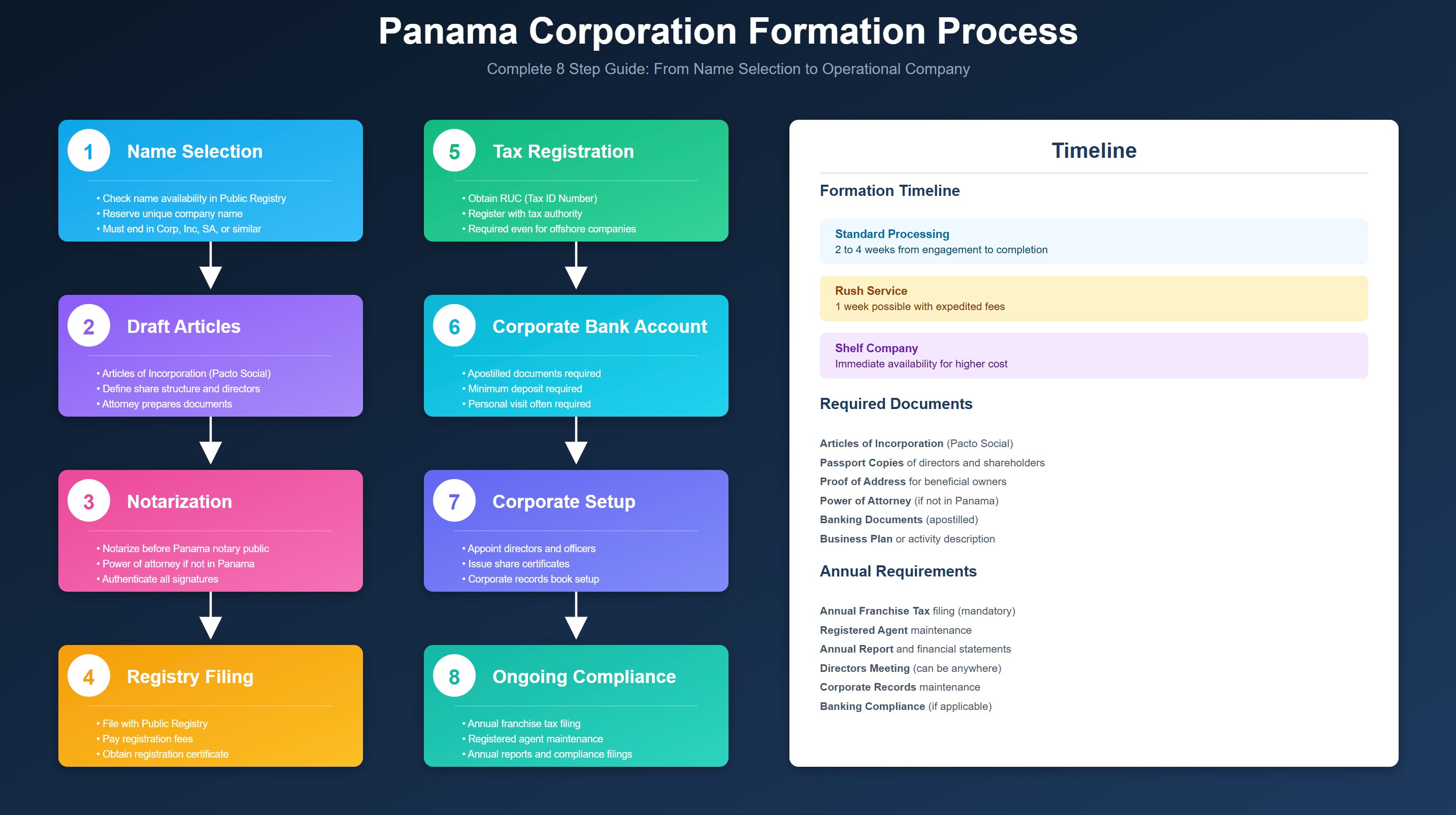
Step 1: Name Selection - Choose a unique company name. Check availability through the Public Registry. Reserve the name.
Step 2: Articles of Incorporation - Draft Articles of Incorporation (Pacto Social). This document defines the company structure, authorized capital, share distribution, and corporate purpose.
Step 3: Notarization - Articles must be notarized before a Panama notary public. If you are not in Panama, the attorney handles this with power of attorney.
Step 4: Public Registry Filing - File notarized Articles with the Public Registry. Pay registration fees. Obtain registration certificate.
Step 5: Tax Registration - Register with Panama tax authority. Obtain RUC (Tax Identification Number). This is required even if no Panama tax is due.
Step 6: Municipality License - If operating in Panama, obtain business license from local municipality. Not required for offshore companies.
Step 7: Banking - Open corporate bank account. This is increasingly difficult and requires substantial documentation.
Timeline: Formation takes 2 to 4 weeks if all documents are in order. Rush services can reduce this to 1 week but cost more.
Corporate Structure Requirements
Directors: Minimum 3 directors required. Directors can be of any nationality and residence. They need not be shareholders. Nominee directors are permitted.
Shareholders: Minimum 2 shareholders required at formation. Can be individuals or corporations. Can be of any nationality. Nominee shareholders permitted.
Share Capital: Minimum authorized capital is $10,000. This capital does not need to be paid in. It can remain as authorized but unissued shares.
Registered Office: Must maintain a registered office in Panama. This is provided by your resident agent.
Resident Agent: Mandatory. Must be a Panama attorney or law firm. Agent receives official correspondence and maintains statutory records.
Bearer Shares: Abolished in 2015. All shares must now be registered with owner names recorded. Some privacy remains through nominee arrangements.
Ongoing Compliance
Annual Franchise Tax: flat each year regardless of activity.
Resident Agent Fee: is paid annually depending on services included.
Annual Report: Financial statements must be filed annually even if no activity. Penalties for late filing.
Directors Meeting: Annual meeting required. Can be held anywhere in the world. Minutes must be maintained.
Accounting Records: Must maintain books and records. Need not be in Panama but must be available if requested.
Privacy Protections
Panama still offers reasonable privacy despite increased transparency.
Public Registry: Shows company name, registration date, registered agent, and authorized capital. Does not show shareholders or beneficial owners in public search.
Beneficial Ownership: Must be disclosed to registered agent and reported to government. Not public information but available to authorities under proper legal process.
CRS Reporting: Panama implemented Common Reporting Standard in 2023. Financial accounts are reported to tax authorities in account holder's residence country. Privacy from governments is limited.
Nominee Arrangements: You can use nominee shareholders and directors. Your name does not appear in public records. But the nominee knows your identity and may be compelled to disclose under legal process.
Advantages for Non Residents
Zero tax on foreign source income. US dollar currency eliminates exchange rate risk. Established legal system based on civil law. Quick formation process. Relatively low annual costs. Strategic location for Americas business. Established international banking center despite increasing restrictions.
Disadvantages for Non Residents
Banking is difficult especially for passive holding companies. Reputation damage from Panama Papers scandal. Limited tax treaty network. Increasing compliance requirements. Not suitable for European or US customer facing businesses due to perception. Requires ongoing agent fees and annual filings.
🏛️ Political Stability and Business Environment
Panama has been politically stable since 1990. The US invasion in December 1989 ended the Noriega dictatorship. Democratic elections followed in 1990 and have continued every five years.
Government Structure
Panama is a presidential republic. The president is both head of state and head of government. Elections occur every five years. Presidents are limited to a single term and cannot serve consecutive terms.
This prevents concentration of power. When a president finishes their term, they cannot immediately run again. This forces regular turnover and reduces authoritarian tendencies.
The National Assembly (legislature) has 71 members elected concurrently with the president. The judiciary is nominally independent though corruption remains a concern.
Recent Political History
2019 to 2024: Laurentino Cortizo served as president. His administration faced COVID challenges and economic recovery. Relations with the United States remained stable.
2024 Election: José Raúl Mulino elected president. He took office July 2024. Viewed as pro business and focused on economic growth.
Transfers of power have been peaceful. No coups or significant political violence in over 30 years. This is notable stability for the region.
Economic Stability
The Panama Canal provides steady government revenue. Canal tolls and operations generate over $2 billion annually for the government. This reduces reliance on income taxes and allows competitive business taxation.
The US dollar as currency means Panama cannot devalue or inflate away debt. This provides certainty for foreign investors but limits government monetary policy tools.
Banking sector is significant. Financial services contribute approximately 10% of GDP. The government protects this sector while balancing international compliance requirements.
No Military
Panama abolished its military in 1990. The constitution prohibits armed forces. Only a police force exists for internal security.
This is unusual and creates different dynamics, no military coups are possible, no military spending burden. But Panama relies on regional cooperation and treaty with the United States for external security.
Rule of Law
Panama has functional courts and legal system. Contracts are generally enforceable. Property rights are respected. This is better than many neighbors though corruption exists.
The civil law system is based on Colombian and French legal codes. Predictability is reasonable for business matters. Judicial processes can be slow.
International Relations
Panama maintains relations with both the United States and China. The canal requires good relations with major trading partners. The country avoids taking strong positions in international conflicts.
Trade agreements exist with multiple countries. Panama is generally pro trade and pro foreign investment. The government recognizes that international business is critical to the economy.
Corruption Perceptions
Transparency International ranks Panama in the middle globally on corruption. Better than regional average but not at developed country levels.
The Panama Papers scandal in 2016 highlighted how law firms facilitated tax evasion and money laundering for international clients. This damaged the country's reputation.
Subsequent reforms increased transparency requirements. The country works to improve its image while balancing offshore industry interests.
Panama offers stable governance with regular peaceful elections. The US dollar provides monetary stability. The canal generates reliable government revenue. Rule of law is functional for commercial matters. This creates an acceptable environment for international business despite some corruption concerns.
🏦 Banking in Panama: Reality Check
Panama has over 70 international banks. The banking center is well established. But opening a bank account as a foreign corporation has become significantly more difficult.
Banking Secrecy Reality
Panama historically offered strong banking secrecy. The Banking Law of 1998 protected client confidentiality. Banks could not disclose information without legal process.
This has changed dramatically. FATCA (Foreign Account Tax Compliance Act) requires banks to report US person accounts to the IRS. CRS (Common Reporting Standard) requires reporting to most other countries.
Banking secrecy from governments is effectively gone for most account holders. Privacy from private parties still exists but not from tax authorities.
Account Opening Requirements
Opening a corporate account requires extensive documentation:
Corporate Documents: Notarized Articles of Incorporation. Certificate of Incumbency showing current directors and officers. Corporate resolutions authorizing account opening. Shareholders register showing beneficial owners.
Beneficial Owner Due Diligence: Passport copies of all beneficial owners (owning 10% or more). Proof of address (utility bill, bank statement). Source of funds declaration. Source of wealth explanation. Business plan or description of activities.
Apostille and Legalization: Foreign documents must be apostilled or legalized. Panama requires authentication of foreign corporate documents. This adds time and expense.
Initial Deposit: Most banks require an initial deposit for corporate accounts. Some require more for foreign corporations without Panama operations.
Personal Visit: Many banks require beneficial owners to visit Panama in person. Video conferencing is sometimes accepted but in person is preferred. This is a significant barrier for purely offshore structures.
Which Banks Accept Foreign Corporations?
Major international banks operating in Panama include HSBC, Citibank, and Scotiabank. These banks have strict compliance departments. They typically reject passive holding companies or pure offshore structures.
Local Panama banks like Banco General, BAC Credomatic, or Multibank are more flexible but still have stringent requirements. They want to see real business activity.
What Banks Look For: Operating business with customers and suppliers. Regular transaction flow. Substance (employees, office, operations). Explanation for using Panama corporation. Clean background of beneficial owners.
What Banks Avoid: Shell companies with no substance. Passive investment holding companies. Single transaction or one off deals. Unclear source of funds. High risk jurisdictions or industries. Structures that appear designed purely for tax avoidance.
Banking Alternatives
If Panama banking is difficult, consider:
Other Jurisdictions: Open accounts in Singapore, Hong Kong, or Switzerland with the Panama company. Some international banks will accept Panama corporations if the business model is clear.
Payment Processors: Use services like Wise, Payoneer, or similar for transaction processing. Not a full bank account but provides payment functionality.
Correspondent Banking: Some Panama banks offer correspondent relationships where they hold funds but you operate through another bank.
Banking Costs
Account maintenance fees for corporate accounts typically range from $50 to $150 per month. Minimum balance requirements prevent fees at many banks. Transaction fees apply for wires and international transfers.
Multi Currency Accounts
Most Panama banks offer US dollar accounts. Many also offer euro, British pound, and other major currencies. This facilitates international business without constant currency conversion.
Private Banking
For high net worth individuals and substantial corporate accounts, private banking services exist. Relationship managers provide personalized service. Minimum balances typically start at $250,000 to $500,000.
Private banking offers better access and service but costs more. It may be easier to open accounts through private banking divisions if you meet minimums.
Panama banking is possible but challenging. Pure offshore holding companies struggle. Operating businesses with real activity have better success. Budget time and money for the process. Consider alternatives if Panama banks reject your application. Banking difficulty is the biggest practical limitation for Panama corporations today.
🏢 Known Companies and Real Examples
Many companies use Panama for various purposes. Some are headquartered there. Others use Panama for specific subsidiaries or functions.
Copa Airlines and Copa Holdings
Copa Airlines is Panama's flag carrier and a major Latin American airline. It serves over 70 destinations in the Americas.
Copa Holdings, the parent company, is incorporated in Panama but trades on the New York Stock Exchange (NYSE: CPA). This demonstrates Panama corporations can access US capital markets through proper structures.
Copa uses Panama as a hub for connecting North and South America. The geographic position is ideal for airline operations. The company employs thousands in Panama and contributes significantly to the economy.
Panama Canal Authority
The Panama Canal Authority operates the canal. It is an autonomous government agency, not a private company. But its operations demonstrate Panama's importance in global shipping.
The canal generates over $2 billion annually. It is one of the most profitable shipping routes globally. Expansion completed in 2016 allows larger vessels including some container ships that previously could not transit.
Shipping Registry
Panama has the largest ship registry in the world by tonnage. Thousands of ships fly the Panama flag.
This is called a flag of convenience. Ship owners register vessels in Panama for favorable regulations and taxation. The ship need not ever visit Panama. This is similar to how companies incorporate in Delaware but operate elsewhere.
Major shipping lines including Carnival Cruise Lines, Maersk, and others register vessels in Panama. This generates registry fees and positions Panama as a maritime center.
Banking Institutions
Banco General: The largest private bank in Panama. Founded in 1955. Assets over $20 billion. Serves both local and international clients.
Banistmo: Major retail bank owned by Bancolombia. Strong presence in Central America.
International Banks: HSBC, Citibank, Scotiabank all operate in Panama serving regional and international clients.
Logistics and Distribution
Companies operating logistics centers leverage Panama's position. Distribution hubs serve Latin America. The country is a natural transshipment point.
Dell, Hewlett Packard, and other technology companies have used Panama for regional distribution. Products shipped from Asia are consolidated in Panama then distributed to Latin American markets.
Pharmaceutical and Medical
Some pharmaceutical companies use Panama for regional headquarters or distribution. The Colon Free Zone adjacent to the canal is a major trading area.
St. George's University operates a medical school in the Caribbean but has administrative functions in Panama for some programs. Many offshore medical schools have Panama connections.
Law Firms and Professional Services
Major international law firms maintain Panama City offices. These firms serve the offshore industry and regional business.
Mossack Fonseca was the most famous until the Panama Papers scandal in 2016. The firm closed in 2018. Other firms continue operating with increased compliance focus.
Shell Companies and Holding Structures
Countless holding companies and shell entities are incorporated in Panama. Most are not publicly known. They hold assets, intellectual property, or serve as intermediate holding companies in larger structures.
This is the traditional offshore use of Panama. Less prominent than operating businesses but still common.

📈 Route to US Stock Market
A Panama corporation cannot directly list on US stock exchanges. NYSE and NASDAQ require specific corporate structures. But there are paths to US capital markets.
Why Panama Corporations Cannot List Directly
US exchanges require corporations to comply with SEC regulations. Most SEC rules assume US corporate law structures. Panama corporations have different governance and shareholder rights.
Additionally, US investors and regulators are more comfortable with Delaware or other US state corporations. There is no technical prohibition but practical barriers are high.
Copa Holdings Example
Copa Holdings is incorporated in Panama but trades on NYSE. How?
The company structured itself to comply with SEC requirements. It maintains governance standards acceptable to US investors. It files regular reports with the SEC as a foreign private issuer.
The company has significant operations in Panama justifying Panama incorporation. It is not a shell or pure offshore structure. Real business with employees, aircraft, and revenue.
This required substantial legal work to navigate SEC requirements while maintaining Panama corporate form. Costs were significant. Ongoing compliance is complex.
Reincorporation to Delaware
The more common path is reincorporation. Convert the Panama corporation to a Delaware C corporation before pursuing US listing.
Process: Form a Delaware corporation. Transfer all assets and liabilities from the Panama corporation to Delaware entity. Dissolve or maintain the Panama corporation as a subsidiary. Complete this well before IPO preparations begin.
This is what most venture backed companies do. If you start with a Panama corporation for tax reasons and later want US venture capital or IPO, you reincorporate to Delaware.
Foreign Private Issuer Status
Some non US companies list on US exchanges as foreign private issuers. This reduces some SEC compliance burdens compared to US domestic companies.
But even as a foreign private issuer, a Panama corporation faces challenges. Investors may be skeptical. Governance structure must meet minimum standards. Accounting must be acceptable (US GAAP or IFRS).
Alternative: List in Panama Stock Exchange
Panama has a local stock exchange (Bolsa de Valores de Panama). It is small compared to major exchanges. Liquidity is limited. But it provides an option for companies that want public trading without US listing.
Some regional companies list in Panama to access Central American capital. This works for businesses with local or regional focus.
Practical Recommendation
If your goal is eventual US IPO or significant US venture capital, do not incorporate in Panama. Form a Delaware C corporation from the start.
If you use Panama for tax optimization on international operations and do not plan US capital markets, Panama works. You can always restructure later if plans change.
Do not let offshore tax benefits prevent future growth opportunities. Balance current savings against future flexibility.
Panama corporations face significant barriers to US stock market listing. Copa Holdings is an exception due to real operations and extensive compliance. Most companies reincorporate to Delaware before pursuing US IPO. Plan your structure based on your actual capital raising and exit strategy, not just current tax optimization.

🎯 When to Choose Panama
Panama is not right for every situation. It fits specific use cases. Let me clarify when Panama makes sense and when it does not.
Choose Panama If:
International Trading Company: You buy and sell products or services between foreign countries. No sales to Panama customers. No operations in Panama. Pure offshore trading benefits from territorial tax treatment.
Intellectual Property Holding: You own patents, trademarks, or copyrights. You license them to companies in various countries. Royalty income is foreign source. Tax exempt in Panama.
Investment Holding Company: You hold shares in foreign companies or other investments. Dividends and capital gains are foreign source. No Panama tax. But banking may be difficult.
Regional Headquarters: Your business operates across Latin America. Panama's geographic position is strategic. US dollar currency facilitates transactions. You may have some Panama operations but significant foreign income.
Shipping or Logistics: Your business involves international shipping. Panama's maritime registry and canal position are advantages. Foreign income from shipping is tax exempt.
Asset Protection: You want to separate assets from your home country jurisdiction for protection purposes. Panama privacy and legal separation provide a layer of protection.
Currency Stability Needed: You operate in regions with unstable currencies. Holding funds in US dollars through Panama accounts provides stability.
Avoid Panama If:
US or EU Customer Facing Business: If your customers are primarily in developed markets, they may have concerns about Panama. Reputational risk from Panama Papers lingers.
Need European Banking: European banks are particularly reluctant to serve Panama companies. If you need EU banking access, consider other jurisdictions.
Venture Capital Plans: VCs typically require Delaware C corporations. They will not invest in Panama corporations. Reincorporation is possible but adds complexity.
Highly Regulated Business: Banking, insurance, financial services face extra scrutiny. Using Panama may create compliance issues with your own regulators.
Expecting Tax Treaties: Panama has limited tax treaty network. If you need treaty benefits, choose a jurisdiction with extensive treaties.
Minimal Cost Priority: If you want the absolute cheapest offshore structure, other jurisdictions like Nevis or BVI may be less expensive for basic holding companies.
US Person: If you are a US citizen or resident, Panama offers little benefit. You still pay US tax on worldwide income. FATCA creates additional reporting. Better options exist.
Comparison to Other Jurisdictions
Panama vs BVI: BVI has better reputation and easier banking. Panama has territorial tax advantage. Choose BVI for pure holding, Panama for active trading.
Panama vs Nevis: Both offer privacy and asset protection. Nevis is cheaper annually. Panama has better banking infrastructure. Nevis is better for pure asset protection, Panama for active business.
Panama vs Delaware: Delaware for US facing business or venture capital. Panama for international operations with no US nexus. Completely different use cases.
Panama vs Singapore: Singapore has better international reputation and easier banking. Panama has territorial tax and lower costs. Singapore for serious international business, Panama for cost effective offshore structure.
Substance Requirements
If you use Panama purely as a paper company, you risk challenges:
Your home country may ignore the Panama company and attribute income directly to you. Tax authorities may argue lack of substance. Some countries have anti avoidance rules targeting low substance offshore entities.
Creating substance means: Directors who actually make decisions. Local service providers beyond just resident agent. Regular meetings with documented minutes. Real business activity flowing through the company.
The more substance, the more defensible the structure. But more substance costs more.

🤝 How 1Stop Connect Helps
We have formed Panama corporations for clients in various industries. We understand what works and what does not.
Formation Services
Complete incorporation handling. We work with established Panama attorneys and registered agents. Name reservation. Articles of Incorporation drafting. Notarization coordination. Public Registry filing. Tax registration (RUC). All documents apostilled for international use.
We provide nominee directors and shareholders if needed for privacy. The nominees are professionals who understand their role and obligations.
Timeline is typically 2 to 3 weeks from engagement to completion. Rush service available for urgent situations.
Registered Agent Services
Ongoing resident agent services in Panama. Registered office address. Receipt of official correspondence. Annual franchise tax filing. Annual report preparation and filing. Compliance calendar management. Corporate records maintenance.
Annual fees are transparent. No hidden charges. Renewal invoices sent well in advance of deadlines.
Banking Introductions
We introduce clients to Panama banks where we have relationships. We help prepare documentation packages. We explain what banks look for and how to present your business.
We cannot guarantee account approval. Banks make their own decisions. But we improve your chances by proper preparation and choosing appropriate banks for your profile.
If Panama banking fails, we suggest alternatives in other jurisdictions or payment processor solutions.
Tax Planning and Compliance
We help structure operations to maximize territorial tax benefits. We explain documentation requirements to prove foreign source income. We coordinate with tax advisors in your home country to ensure overall structure works.
We do not provide tax advice for your home country. You need local advisors. But we coordinate structures between jurisdictions.
When We Recommend Against Panama
We tell clients honestly when Panama is not suitable. If you need US venture capital, we recommend Delaware instead. If you are a US person, we explain why Panama offers minimal benefit.
If your business model will struggle with banking, we discuss this upfront before you spend money on formation.
We prefer to advise against Panama and maintain your trust than form a company you cannot use effectively.
Restructuring Support
If you have an existing Panama corporation that is not working, we help restructure. This might mean adding substance, changing business model, reincorporating elsewhere, or dissolving the Panama entity.
We handle dissolutions and closures when clients no longer need the structure.
Let us help you get started.
This article provides educational information about Panama company structures based on regulations as of March 2026. It is not legal advice. It is not tax advice. It is not a substitute for professional consultation.
Company formation laws, tax regulations, and substance requirements change. What is accurate today may change tomorrow. Licensing requirements vary by emirate and specific business activity. Banking policies change frequently.
Before forming any company structure, consult with licensed legal and tax professionals familiar with your specific situation. 1Stop Connect provides company formation services and can connect you with appropriate legal and tax advisors as needed.
The information here is accurate to our knowledge as of publication but carries no warranty. Laws change. Regulations evolve. Always verify current requirements before proceeding.
If you would like to discuss your specific situation, contact us directly. That is exactly what we are here for.