
Why Hong Kong Still Matters in 2026
Hong Kong has been declared dead more times than I can count. After the 1997 handover, skeptics predicted collapse. During the 2019 protests, headlines wrote obituaries. When the 2020 National Security Law passed, commentators proclaimed the end.
I've been operating a company here since 1998. Through the handover, through SARS, through protests, through every geopolitical headwind. Hong Kong isn't dead. It's different, yes. But for international business structuring, it remains one of the most powerful jurisdictions on the planet.
"The key to understanding Hong Kong is to stop thinking of it as a city and start thinking of it as a financial operating system."
— Lee Kuan Yew, Former Prime Minister of Singapore
After 26 years, I can tell you: Hong Kong works. Not perfectly. Not without challenges. But if you structure correctly and understand what you're doing, it's extraordinary.
- Why Hong Kong Still Matters in 2026
- From British Colony to Gateway: A Quick History
- Three Ways to Structure: Offshore, Local, or Hybrid
- Substance: What You Actually Need
- Banking: The Real Challenge
- Currency: HKD vs RMB and the China Factor
- Trust Structures: Privacy and Asset Protection
- Setup for Foreigners: What You Need
- Why Should I Set Up in Hong Kong?
- The Future Through 2047 and Beyond
From British Colony to Gateway: A Quick History

Hong Kong was British from 1842 to 1997. On July 1, 1997, sovereignty transferred to China under "One Country, Two Systems" guaranteeing Hong Kong's capitalist system, common law courts, and separate currency until 2047.
For 22 years after handover to China, the system largely worked. Then came 2019's protests and 2020's National Security Law. Political autonomy decreased. Banking became stricter. Some companies left for Singapore.
But here's what didn't change: the tax system, the legal framework, the banking infrastructure, the access to China. For offshore structuring and China market entry, Hong Kong remained exceptional.
Three Ways to Structure: Offshore, Local, or Hybrid

Offshore Companies: Zero Tax Structure
This is the classic play. Incorporate a Hong Kong limited company, but conduct all business outside Hong Kong. Your clients aren't in HK. Your suppliers aren't in HK. Your services are delivered elsewhere.
Under Hong Kong's territorial tax system: if profits aren't Hong Kong-sourced, you pay zero tax. Not a loophole. The explicit design.
Advantages
- Zero tax on offshore profits. No capital gains tax, no withholding tax on dividends, no VAT.
- International credibility. A Hong Kong company carries weight globally.
- Common law jurisdiction.Independent courts, enforceable contracts, English business language.
- Banking access. Though tougher since 2019, still accessible with proper substance.
- No capital controls. Move money in and out freely. HKD fully convertible.
Challenges
- Substance requirements.Need physical office, company secretary, ideally local director.
- Annual audit mandatory. Even for dormant companies.
- Banking is difficult. Enhanced due diligence since 2019. Must demonstrate real business.
- Get it wrong, pay 16.5% retroactively. Offshore claims must be defensible.
- Political risk. China's influence increasing. Future uncertain post-2047.
Local Companies: Active HK Business
If you're actually doing business in Hong Kong—office here, staff here, clients here—you're a local company. You pay 16.5% profits tax on Hong Kong-sourced income. Still competitive globally. Lower than Singapore (17%), China (25%), UK (25%), or the US.
Still no VAT, no capital gains tax, no dividend withholding for non-residents.
Advantages
- Full access to Hong Kong's legal framework and double tax treaties.
- Competitive 16.5% tax rate — lower than Singapore, UK, US, and China.
- No VAT, no capital gains tax, no dividend withholding for non-residents.
- Stronger banking position. Active local operations make account opening far easier.
- Employment visa eligibility. Running a local company supports residency applications.
Challenges
- Tax applies to all HK-sourced profits. You cannot claim offshore exemption on local income.
- Higher substance costs. Real office, local staff, and ongoing operational expenses.
- Annual audit mandatory. Full financial reporting required regardless of size.
- Greater compliance burden. Payroll, MPF contributions, employment regulations to manage.
- Political risk. China's growing influence may affect long-term operating environment.
Hybrid Structures: The Gray Zone
Many structures exist between pure offshore and fully local. Nominee directors. Serviced offices. Agency arrangements where the HK company facilitates transactions but doesn't take title to goods.
Legal? It depends on execution. Hong Kong allows nominees and corporate services. What it doesn't allow is claiming offshore status for profits actually generated in Hong Kong. The line isn't always clear.
Advantages
- Tax flexibility. Structure income flows to legitimately minimise Hong Kong tax exposure.
- Lower substance cost than fully local. Serviced offices and nominee directors reduce overhead.
- Gateway positioning. Facilitates China access and regional transactions without full local setup.
- Scalable structure. Can transition to fully local if business grows on-the-ground in HK.
- Common law protection. Contracts, IP, and commercial arrangements enforceable in HK courts.
Challenges
- Regulatory gray zone. The line between legitimate hybrid and non-compliant offshore claim requires expert guidance.
- Banking scrutiny. Nominee-heavy structures face enhanced due diligence and possible rejection.
- Audit and compliance still mandatory. Annual audit required regardless of activity level.
- Risk of reclassification. IRD may deem profits HK-sourced if substance doesn't match the structure claimed.
- BEPS exposure. OECD compliance requirements increasingly challenge thin hybrid arrangements.
Substance: What You Actually Need
The global push for economic substance reached Hong Kong. Here's what matters:
🌍 Minimum Requirements
Registered Office: Physical Hong Kong address. Not a PO Box. Serviced office acceptable.
Company Secretary: Mandatory. Must be HK resident or HK company licensed for corporate services.
Director(s): Minimum one. Can be any nationality, any residence. But for banking and credibility, at least one Hong Kong resident director strongly recommended.
Annual Audit: Required for all companies. Qualified HK auditor must audit and sign off.
🌍 Enhanced Substance (For Active Businesses)
If claiming treaty benefits or running substantial operations, you need more:
Qualified employees who can actually perform the claimed functions.
Proportionate operating expenses that match your activity level.
Physical office space if running significant operations.
Key decisions made in Hong Kong by people located in Hong Kong.
This isn't box-ticking. This is being able to defend your structure under scrutiny.
Banking: The Real Challenge
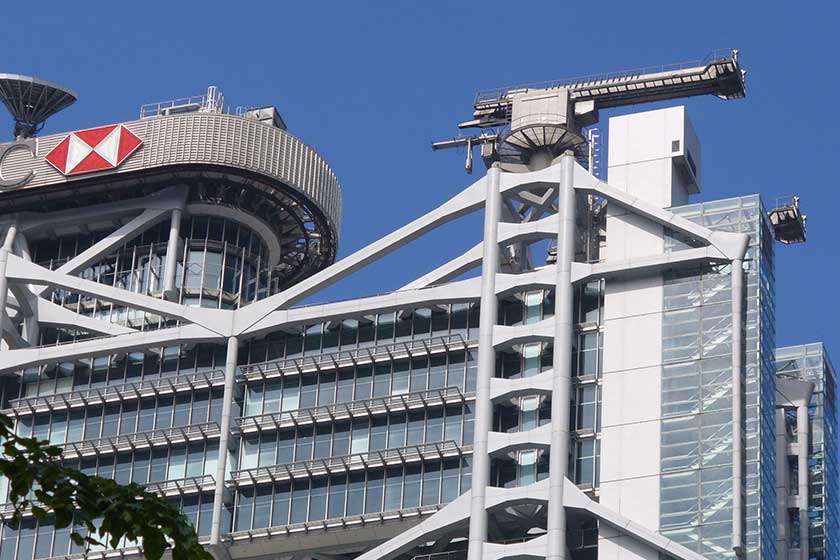
Let me be direct: opening a Hong Kong bank account in 2026 is harder than 2015, infinitely harder than 2005. But not impossible.
Major Banks
HSBC: Largest bank in Hong Kong. Founded here in 1865. Deep roots, but significantly tighter criteria since 2019. Expect multiple documentation rounds and video calls.
Standard Chartered: Similar to HSBC in international reach. Slightly more accommodating for tech and trading companies.
Bank of China (Hong Kong): Obvious choice if your business involves mainland China. Understands cross-border RMB transactions and mainland relationships.
Hang Seng Bank: HSBC subsidiary. Reputation for flexibility with SMEs, though due diligence remains comprehensive.
Why Did Banking Get So Hard?
Three factors converged:
US Sanctions Compliance:
HK banks operate in USD. To maintain access to US financial system, must comply with OFAC regulations. Post-2020, banks became hyper-cautious about mainland China exposure.
AML Pressure:
FATF reviews and EU scrutiny forced enhanced due diligence on all corporate accounts, especially offshore structures.
Reputational Risk:
After billion-dollar AML fines, banks prefer rejection over risk.
How to Improve Your Chances
Substance wins. Real office, local staff, genuine activity gets approved. Shell companies get rejected.
Clear business model. Articulate exactly what you do, who your customers are, why Hong Kong makes sense.
Clean ownership. Transparent beneficial ownership. Complex offshore layers create delays or rejection.
Documentation overkill. Business plan, contracts, supplier agreements, proof of address, reference letters, existing bank statements, audited financials. More is better.
Use professional introducers. Banking relationships matter. We at 1Stop Connect have maintained relationships since 1998. That carries weight.
Currency: HKD vs RMB and the China Factor

Hong Kong Dollar (HKD)
Pegged to USD since 1983. Range: HKD 7.75 to 7.85 per USD. This means HKD moves with USD, not RMB.
Fully convertible. No capital controls. Move money freely. This is massive compared to mainland China's strict capital controls.
Offshore RMB (CNH)
Hong Kong is the world's largest offshore RMB hub. If you're doing China business, you may need RMB transactions. Mainland RMB (CNY) isn't freely convertible. Offshore RMB (CNH) traded in Hong Kong is more flexible.
You can hold CNH deposits, issue CNH bonds, settle cross-border trade without going through China's capital control bureaucracy.
Will China Force HKD to Adopt RMB?
Short answer: not in the foreseeable future.
Long answer: The HKD peg serves China's interests. Hong Kong's value as an international financial center depends on currency convertibility. If HKD were replaced or capital controls imposed, international businesses would leave. Capital would flee. The very thing that makes Hong Kong useful to China—access to global capital—would disappear.
China is pragmatic. Beijing will sacrifice some political autonomy for control. But economically, China benefits enormously from having a free, convertible, globally trusted currency zone on its doorstep.
Trust Structures: Privacy and Asset Protection
Hong Kong isn't just company formation. It's a sophisticated trust jurisdiction. Based on English common law, trusts are recognized and enforceable.
Why Hong Kong Trusts?
Common law framework. Well-established precedents. Professional trustees who understand administration.
No forced heirship rules. Full flexibility in structuring distribution.
Asset protection. Properly structured trusts can protect from creditors and legal challenges.
Tax efficiency. If trust holds offshore assets with no HK-sourced income, potentially zero HK tax.
Privacy. Trusts aren't public record. Though licensed trust companies must maintain beneficial ownership records and comply with CRS/FATCA.
Common Structures
Discretionary Family Trust: Settlor transfers assets to trust. Trustee has discretion to distribute to beneficiaries (usually family). Flexible and tax-efficient.
VISTA Trust: For BVI companies held in HK trust. Separates legal ownership (trustee) from control (settlor). Sophisticated but powerful.
Setup for Foreigners: What You Need
Hong Kong is exceptionally foreigner-friendly. No local ownership required. No resident director required (though recommended). No restrictions on 100% foreign ownership.
Requirements
No residency required. Don't need to be HK resident, have HK ID, or visit Hong Kong. Can incorporate remotely.
One director minimum. Any nationality, any residence. But for banking, have at least one HK resident director (even nominee).
One shareholder minimum. Individual or corporate, any nationality.
Company secretary (must be HK). Individual ordinarily resident in HK or HK incorporated company.
Registered office (must be HK). Physical address, not PO Box.
Share capital. Minimum HKD 1. No minimum paid-up capital requirement.
Investment Visa
Foreign nationals who want to live in Hong Kong and run their business can apply for investment visa under General Employment Policy. Evaluated on business plan, financial resources, economic contribution, job creation for locals.
Personal income tax (Salaries Tax) in Hong Kong is simple and low, with rates ranging from 2% to 17% on net chargeable income. Tax is capped at a standard rate of 15% on net income (for 2024/25).
Initial visa valid 2 years, renewable based on business performance.
Why Should I Set Up in Hong Kong?
After 26 years and everything I've seen, here's why Hong Kong still makes sense:
Zero tax on offshore profits.
Not a loophole—the explicit design. If your business serves international clients, you pay nothing. Legally. Transparently.
86 million people, $1.7 trillion GDP. Want to access mainland markets? Start from Hong Kong with common law protection and international banking.
World-class infrastructure.
Banking system that (despite difficulties) still works. Legal system that international businesses trust. Professional services ecosystem that's mature and sophisticated.
Currency stability and convertibility.
HKD pegged to USD. Fully convertible. No capital controls. Move money freely. Access to offshore RMB (CNH) for China trade.
Common law jurisdiction.
English legal system. Independent courts. Contracts are enforceable. Precedents are clear. This matters when things go wrong.
Foreigner-friendly
100% foreign ownership. No residency requirements. Can incorporate remotely. English as business language.
— Dr.Dieter Hovorka, PhD
Trust structures available.
Asset protection, succession planning, family wealth structuring under established common law framework.
Strategic positioning.
For regional headquarters, holding companies, IP licensing, trading operations, China market entry—Hong Kong offers a combination of advantages no other jurisdiction matches.
Yes, banking is harder. Yes, political uncertainty exists. Yes, China's influence is increasing.
But for the right structures with proper substance, Hong Kong delivers what it always has: a stable, low-tax, internationally respected platform for Asian business.
The question isn't whether Hong Kong still works.
It's whether you understand how to use it correctly. That's where 26 years of experience matters.
The Future Through 2047 and Beyond
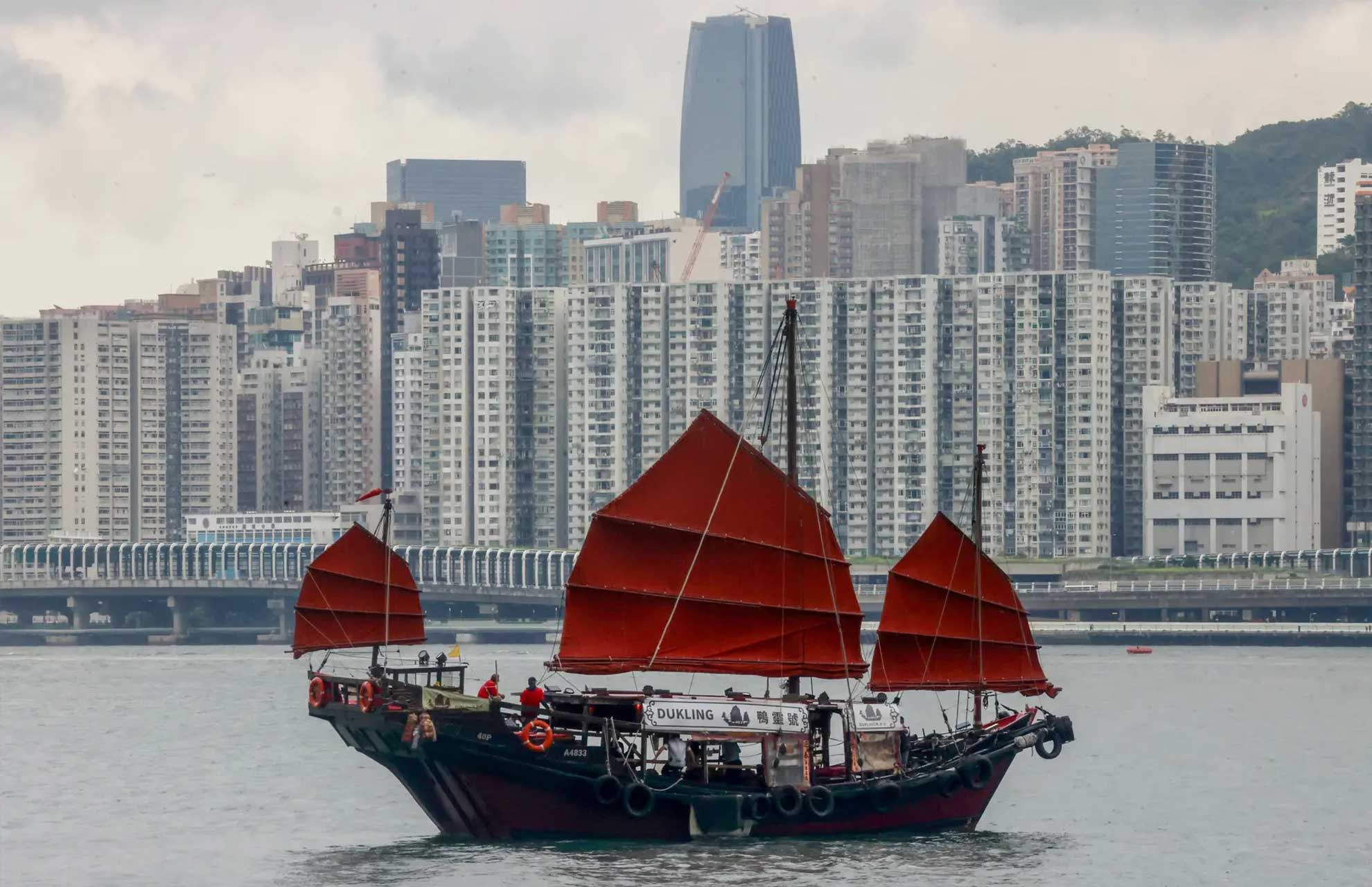
Is Hong Kong still viable long-term?
Honest assessment after 26 years: Hong Kong is changing but not dying. Political landscape shifted. Regulatory environment tightened. Beijing's influence increased. But the economic legal system, currency, banking, the access to China remain largely intact.
Will Hong Kong look the same in 2047?
No. Will it still be useful for international business? Almost certainly yes, because China needs Hong Kong to remain functional and attractive to global capital.
The real risk isn't disappearance.
It's gradual erosion of differentiation from mainland China. If capital controls are imposed, if HKD peg abandoned, if common law eroded, Hong Kong loses competitive advantage.
But as long as China benefits economically from having a free, open, internationally integrated financial center, Hong Kong endures.
For now, in 2026, Hong Kong remains one of Asia's best jurisdictions for offshore structuring, IP holding, regional headquarters, and China market access.
🏆 Why 1Stop Connect for Hong Kong
I've been doing this since 1998. Not advising from a distance. Actually operating a company in Hong Kong for 26 years. Navigating banks, filing returns, managing compliance, adapting to every regulatory change.
When you work with 1Stop Connect on Hong Kong:
Banking relationships since late 1990s. When we introduce clients, banks know us. That matters in 2026.
Substance structuring expertise. We know exactly what's needed for your situation. Not theory. Practical, real-world answers based on what gets approved.
Offshore vs local positioning. We structure to legitimately minimize tax while maintaining full compliance. We know where the line is.
Trust establishment. We work with licensed HK trust companies for family trusts, asset protection, succession planning.
China access strategy. If you're using HK as gateway to mainland, we structure for cross-border trade, RMB transactions, WFOE setup if needed.
This isn't marketing. This is 26 years of operating history.
"The best company structure is the one you actually use, that actually works, and that your bank actually accepts. Perfection on paper is worth nothing if the bank says no."
- Dr. Dieter Hovorka, PhD, after helping 400+ clients across 45+ jurisdictions over 35 yearsThis article reflects my personal experience and opinions accumulated over 35 years. Company formation, tax structuring, and asset protection are highly fact-specific areas of law. Always engage a qualified attorney and tax advisor in both your home jurisdiction and the proposed company jurisdiction before making any decisions. The landscape changes frequently: what was optimal three years ago may not be optimal today.
If you would like to discuss your specific situation, reach out through our contact page. That is exactly what we are here for.