
Good news arrived for UAE small businesses and entrepreneurs on July 29, 2026. The UAE Ministry of Finance issued Ministerial Decision No. 131 of 2026, extending Small Business Relief under the UAE corporate tax system to tax periods ending on or before December 31, 2029. The extension gives UAE resident businesses with annual revenue at or below AED 3 million three additional years of certainty: their corporate tax burden remains zero and their compliance obligations stay simplified, provided they continue to meet the qualifying conditions and actively elect for the relief each year.
For the tens of thousands of small businesses, sole proprietors, freelancers, and startup founders who have been operating under this relief since the UAE introduced federal corporate tax in June 2023, this is not a surprise. The extension was widely anticipated. What it does is remove a looming administrative question that many SME owners had been deferring: what happens when the relief runs out? The answer, for now, is that it does not run out until the end of 2029. What it does not remove is the obligation to understand exactly how the relief works, who qualifies, who does not, and what the act of claiming it actually costs in other ways.
- The History: From Corporate Tax Introduction to the 2026 Extension
- What Small Business Relief Actually Is
- The AED 3 Million Threshold and How It Works Across Multiple Years
- Who Qualifies and Who Does Not
- The Trade-offs You Must Understand Before Electing
- How to Elect for Small Business Relief
- Key Dates and Deadlines
- Frequently Asked Questions
The History: From Corporate Tax Introduction to the 2026 Extension
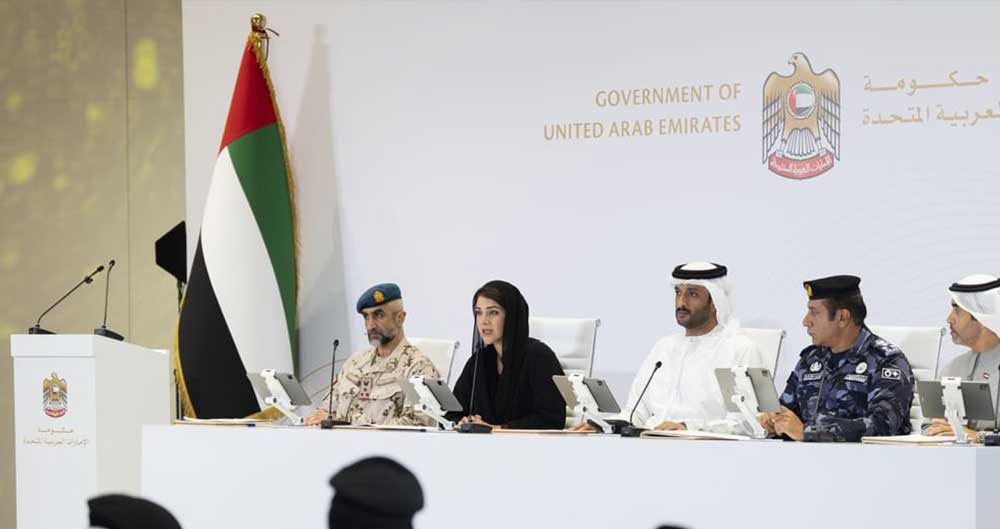
Ministerial Decision No. 131 of 2026 was issued July 29, 2026, extending SBR through December 31, 2029.
To understand what the 2026 extension means, it helps to understand where it came from. The UAE introduced federal corporate tax through Federal Decree-Law No. 47 of 2022, with effect from June 1, 2023. For the first time in its history, the UAE imposed a federal corporate tax on business profits. The headline rate is 9% on taxable income above AED 375,000, with a 0% rate applying on taxable income up to that threshold. Qualifying free zone businesses meeting all prescribed conditions may benefit from 0% on qualifying income under a separate free zone regime.
Article 21 of the Corporate Tax Law provided for a Small Business Relief mechanism, giving the Minister of Finance authority to prescribe conditions under which eligible businesses would be treated as having no taxable income at all for a tax period. The specifics of how that would work were set out in Ministerial Decision No. 73 of 2023, issued on April 3, 2023, before the tax even came into effect. Deloitte noted at the time that the revenue threshold of AED 3 million was a positive development but observed that the original window ran only to December 31, 2026 — a relatively short horizon for structural planning.
The original Ministerial Decision No. 73 of 2023 therefore established the three foundational elements that have remained unchanged through the 2026 extension: the AED 3 million revenue threshold, the cumulative revenue test across all tax periods since June 2023, and the specific exclusions for Qualifying Free Zone Persons and large MNE group members.
On July 29, 2026, the Ministry of Finance issued Ministerial Decision No. 131 of 2026, amending the original decision. The change expands the relief to cover tax periods ending on or before December 31, 2029, giving eligible businesses an additional three years of certainty as the UAE's corporate tax framework continues to mature. All other conditions from the original 2023 decision remain in force without modification.
What Small Business Relief Actually Is

SBR is available to UAE resident businesses with annual revenue at or below AED 3 million. It must be actively elected on each year's corporate tax return.
Small Business Relief is not a tax exemption in the sense of a carve-out from the corporate tax system. It is an election available to eligible UAE resident taxable persons that, when validly made, causes the business to be treated as not having derived any taxable income for that tax period. The practical result is a 0% corporate tax liability for the year in which the election applies.
The relief sits under Article 21 of the UAE Corporate Tax Law and was given its operational framework by Ministerial Decision No. 73 of 2023. The Federal Tax Authority's Small Business Relief guide (CTGSBR1) is the authoritative operational document on how the relief works in practice, covering eligibility, the election process, record-keeping, and the interaction with other provisions of the Corporate Tax Law.
It is an election, not an entitlement. Meeting the revenue threshold does not automatically trigger zero tax. The business must actively elect for the relief through its corporate tax return on EmaraTax. A business that qualifies but does not elect will be assessed under the standard corporate tax rules.
It applies per tax period. The election must be made for each tax period individually. Electing in year one does not carry forward to year two. Each year is a fresh assessment of both eligibility and the decision to elect.
It simplifies compliance as well as tax. Businesses that elect for Small Business Relief may submit a simplified corporate tax return. This means less detailed financial reporting, reduced accounting complexity, and lower professional costs for preparation. For very small businesses and sole proprietors, this compliance simplification is often as valuable as the tax saving itself.
The AED 3 Million Threshold and How It Works Across Multiple Years

The threshold applies to the current period and every period since June 2023. Exceed it once and the relief is gone permanently.
The most important technical detail of Small Business Relief is that the AED 3 million revenue test is not simply an annual figure. The threshold looks at revenue rather than profit after expenses. For example, a business with AED 2.5 million in revenue and AED 1.8 million of expenses has AED 700,000 of accounting profit — but the test is applied to the AED 2.5 million revenue figure, not the profit.
More significantly, the test is cumulative. To qualify for Small Business Relief in any given tax period, a business must have had revenue at or below AED 3 million in that period and in every previous tax period since the regime began on June 1, 2023. This is not a rolling average or a lookback to just the prior year. It is a permanent disqualification rule: exceed the threshold in any single period and the relief is unavailable forever, regardless of how the business performs in later years.
The FTA specifically provides an example where a business with current revenue below AED 3 million is ineligible because its previous-period revenue exceeded the threshold. Once the threshold is exceeded in any tax period, Small Business Relief is no longer available in subsequent periods, even if the business's revenue later falls back below AED 3 million. Businesses that had a strong year followed by a slower year should check their eligibility carefully before assuming they still qualify.
Revenue for this purpose is determined in accordance with accounting standards accepted in the UAE, typically IFRS (International Financial Reporting Standards). This means gross revenue recognised under the applicable accounting framework, not cash received, not profit, and not revenue net of returns or discounts unless those are already excluded under the accounting treatment. For businesses where revenue recognition is complex — subscription models, long-term contracts, agency arrangements — getting the revenue figure right requires care.
One further nuance applies to businesses that are part of a tax group. A tax group is treated as a single taxable person, so the AED 3 million threshold applies to the group's consolidated revenue, not to each member separately. Three small companies with AED 1.3 million, AED 0.9 million, and AED 1 million of revenue that form a tax group have combined revenue of AED 3.2 million and are therefore not eligible, even though each member individually falls under the threshold.
Who Qualifies and Who Does Not
| Category | Eligible for SBR? | Key condition |
|---|---|---|
| UAE mainland company (LLC, sole establishment) | Yes — if revenue test met | Revenue at or below AED 3m in all periods since Jun 2023 |
| Natural person / freelancer / sole proprietor | Yes — if revenue test met | Business income (not employment income) must be within threshold |
| Free zone company NOT confirmed as QFZP | Yes — if revenue test met | Must not have been assessed as a Qualifying Free Zone Person |
| Qualifying Free Zone Person (QFZP) | No — excluded | QFZP regime and SBR are mutually exclusive; QFZP cannot elect SBR |
| MNE Group member (group revenue over AED 3.15bn) | No — excluded | Excluded regardless of the individual entity's own revenue |
| Business that exceeded AED 3m revenue in any prior period | No — permanently disqualified | Even if current-period revenue is below threshold |
| Tax group (consolidated revenue above AED 3m) | No — excluded | Threshold tested at group level, not individual member level |
One important clarification that many free zone businesses miss: a free zone company is not automatically a Qualifying Free Zone Person. To be a QFZP, a free zone entity must satisfy five specific conditions set out in the Corporate Tax Law, including having adequate substance in the free zone, deriving only qualifying income, and meeting certain transfer pricing and compliance requirements. Many free zone companies have never been assessed against these conditions and have no confirmed QFZP status. Those businesses may still qualify for Small Business Relief if their revenue is within the threshold. 1Stop Connect and its accredited partner assists free zone businesses in determining their correct corporate tax status before any election is made.
The Trade-offs You Must Understand Before Electing
Tax losses are suspended. In any tax period where a business elects for Small Business Relief, any tax losses incurred in that period cannot be carried forward to offset taxable income in a future period. This means that if your business made a genuine operating loss in a year where you claimed SBR, you permanently lose the ability to use that loss to reduce your tax in a profitable future year.
Net Interest Expenditure deduction is suspended. Similarly, any disallowed Net Interest Expenditure from a period where SBR is elected cannot be carried forward. Businesses with significant debt financing or inter-company loans should consider whether this restriction affects their overall tax position.
In practice, for a genuinely small and profitable business with no significant losses or interest expenses, these trade-offs are largely irrelevant. The zero-tax outcome is simply better than paying 9% on profits above AED 375,000. But for a startup burning through cash and accumulating losses in its early years, electing for SBR in those loss-making years could be a mistake: you forgo the tax losses that would have sheltered taxable income once the business turns profitable. In those cases, filing a standard corporate tax return — even with no tax due, because losses offset any taxable income — preserves the loss carry-forward for future use.
"The extension to 2029 gives businesses time to plan. Use that time well. Do not assume that simply being below AED 3 million means you should automatically elect. The right answer depends on your loss position, your growth trajectory, and whether you are heading toward the threshold."
— Dr. Dieter Hovorka, PhDHow to Elect for Small Business Relief
The SBR election is made through EmaraTax as part of the annual corporate tax return. Registration must come first.
The mechanics of claiming Small Business Relief follow a straightforward sequence, but each step must be completed correctly.
Step 1: Register for corporate tax. All UAE businesses — including those that intend to claim Small Business Relief — must first be registered for corporate tax through the EmaraTax portal. Registration is not optional even if you expect zero tax liability. Failure to register carries FTA penalties.
Step 2: Confirm eligibility before filing. Before claiming the relief, verify that your revenue meets the AED 3 million threshold for the current period and all previous periods since June 2023. Confirm that you are not a Qualifying Free Zone Person and not a member of a large MNE group. Verify that revenue is measured correctly under applicable accounting standards.
Step 3: Elect on the corporate tax return. Eligible businesses must elect to apply Small Business Relief through their Corporate Tax return. The election is made within the return on EmaraTax. It is not a separate application and it is not carried forward from prior years. It must be made afresh for each tax period.
Step 4: Submit by the deadline. The FTA confirmed that taxpayers whose financial year ended on December 31, 2025 must submit their Corporate Tax returns and settle any Corporate Tax due no later than September 30, 2026. The deadline for other financial year-end dates follows a nine-month window from the end of the relevant tax period. Missing the filing deadline removes the ability to elect for SBR in that period.
Step 5: Maintain records. Even with Small Business Relief, businesses must maintain adequate books and records. The FTA retains the right to verify that the qualifying conditions were met. Anti-abuse rules under Article 50 of the Corporate Tax Law apply: if the FTA determines that a business has artificially separated its activities or operations to remain below the AED 3 million threshold, it may disregard the SBR election and assess corporate tax at the standard rate.
For businesses that are unsure of their eligibility, have complex revenue structures, or operate across multiple free zones and mainland entities, working through the eligibility assessment and return preparation with a qualified advisor is strongly recommended. 1Stop Connect and its accredited program partner provides corporate tax compliance support for UAE businesses at every stage of the process, from initial registration through annual return filing.
Key Dates and Deadlines
| Date | Event |
|---|---|
| 1 Jun 2023 | UAE corporate tax came into effect. First tax period begins for most businesses. |
| 3 Apr 2023 | Ministerial Decision No. 73 of 2023 issued — original SBR rules with AED 3m threshold, expiry Dec 31, 2026. |
| Jan 2024 | FTA published Small Business Relief Corporate Tax Guide (CTGSBR1) with detailed operational guidance. |
| 29 Jul 2026 | Ministerial Decision No. 131 of 2026 issued — SBR extended to tax periods ending on or before 31 December 2029. |
| 7 Aug 2026 | Extension publicly announced by the Ministry of Finance and widely reported. |
| 30 Sep 2026 | Deadline to file corporate tax return and settle tax for financial year ending 31 December 2025. |
| 31 Dec 2029 | Final tax period end date for which Small Business Relief may be claimed under the current extension. |
The timeline illustrates an important point about the filing deadline that is easy to miss. If your financial year ends December 31, the corporate tax return for any given year is due nine months later, at the end of September of the following year. So the return for the year ending December 31, 2025 — the year in which many businesses filed their first-ever UAE corporate tax return — was due September 30, 2026. For businesses with other financial year-end dates, the nine-month rule applies from their specific year-end.
The extension through December 31, 2029 means that a business with a December 31 financial year-end will be able to claim SBR for the 2026, 2027, 2028, and 2029 tax years. The final return for the 2029 year would therefore be due September 30, 2030. Contact 1Stop Connect to confirm the correct deadlines for your specific financial year-end and ensure your returns are filed correctly and on time.
Frequently Asked Questions
What is UAE Small Business Relief and what has changed? +
Small Business Relief (SBR) allows eligible UAE resident businesses to elect to be treated as having no taxable income for a tax period, meaning zero corporate tax for that year. Originally it applied to tax periods ending on or before December 31, 2026. The UAE Ministry of Finance has now extended the timeframe for companies to claim Small Business Relief to include tax periods ending on or before December 31, 2029, via Ministerial Decision No. 131 of 2026. The AED 3 million threshold and all other conditions are unchanged.
What is the AED 3 million threshold and how does it work? +
To qualify, a UAE resident business must have revenue of AED 3 million or less in the current tax period and in every previous tax period since June 2023. The test is cumulative: exceed the threshold in any single period and the relief is permanently unavailable, even if revenue falls back below AED 3 million later. Revenue is measured on gross turnover under applicable accounting standards, not on profit.
Who is excluded from Small Business Relief? +
Two categories are excluded regardless of revenue: Qualifying Free Zone Persons (QFZPs) who cannot stack SBR on top of the free zone 0% regime; and members of MNE Groups with consolidated global revenue above AED 3.15 billion. A free zone company that has not been confirmed as a QFZP may still qualify. Businesses that exceeded AED 3 million in any prior period are also permanently ineligible. Tax groups are assessed on consolidated revenue, not individual member revenue.
Is Small Business Relief automatic? +
No. It must be actively elected through the corporate tax return on EmaraTax for each tax period. Having revenue below AED 3 million does not remove the obligation to register for corporate tax, file a return, and make the election. Missing the filing deadline removes the ability to claim SBR for that period.
What are the trade-offs of claiming Small Business Relief? +
Electing for SBR suspends tax loss carry-forwards and Net Interest Expenditure deductions for the period in which the election is made. Any losses incurred in an SBR period cannot be used to offset future taxable income. For loss-making startups, the standard corporate tax route may be more advantageous long-term even though it involves more compliance work. Speak with a tax advisor before electing, particularly if your business is in a high-growth or loss-making phase. 1Stop Connect and its accredited partner can assist with this assessment.