
If your company hires staff from India, Pakistan, the Philippines, Bangladesh, Nigeria, or any of the 42 other countries now named in the UAE ICP's phased requirement, this change is already affecting you or will affect you very soon. The UAE Federal Authority for Identity, Citizenship, Customs and Port Security has introduced a mandatory Good Conduct Certificate, also known as a Police Clearance Certificate, for employment and residence visa applications from nationals of 45 designated countries. Phase 1 started on 16 June 2026. Phase 2 starts on 15 August 2026. Phase 3 starts on 15 November 2026. None of these timelines are suggestions and none of them include grace periods for documentation that was not prepared in advance.
"Back in 2004 when I applied for my first residence visa in Dubai, I had to bring a police clearance certificate from my home country. It was completely normal at the time and it applied to anyone who wanted a residence visa and work permit in the UAE, regardless of nationality or job. Over the years we have observed many government processes being simplified and eased. What we are seeing now is a return to the old way of doing things. More thorough, more structured and with processing timelines that have in some cases tripled compared to what applicants were used to in the more relaxed years in between."
— Dr. Dieter Hovorka, PhDI have spent years helping companies navigate UAE visa and residency processes through 1Stop Connect's residence visa services, and what I see in changes like this is always the same pattern: the businesses that plan ahead lose nothing but a few hours of preparation time. The businesses that do not plan ahead lose weeks, miss hire dates, and sometimes lose the candidate entirely. This is one of those changes that rewards preparation in a very direct way.
- What a Good Conduct Certificate Actually Is
- Who Issued This Requirement and Why
- The Three Phases — Countries and Dates
- Which Visa Types Are Affected
- The Attestation Process — Steps and Timeline
- The One Mistake That Gets Applications Rejected
- What This Means for Employers and HR Teams
- What to Do Right Now
- Frequently Asked Questions
What a Good Conduct Certificate Actually Is
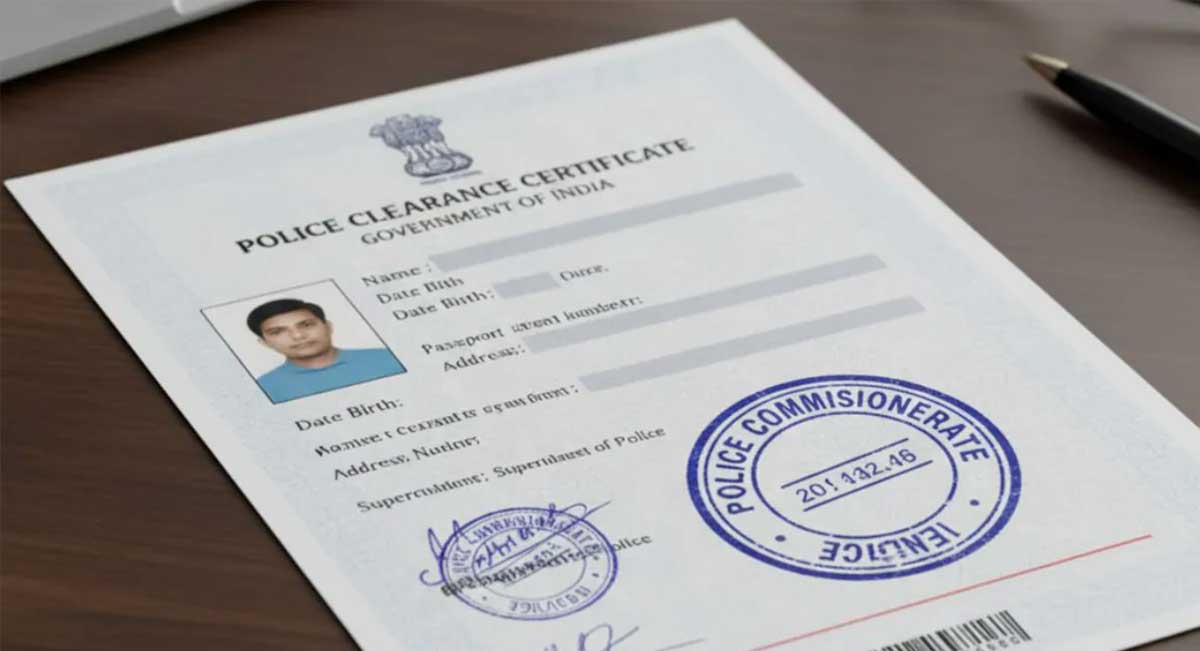
A Good Conduct Certificate (Police Clearance Certificate) is an official document confirming the absence of criminal convictions issued by the applicant's home country authority. For UAE visa purposes it must be attested by the UAE Embassy or Consulate in the issuing country before submission.
A Good Conduct Certificate and a Police Clearance Certificate are the same document. Different countries and authorities use different names for it but the function is identical: it is an official document issued by the competent police or judicial authority in the applicant's country of nationality, confirming that the person has no criminal convictions or pending criminal proceedings in that country. Some countries call it a Certificate of Good Character, others call it a Criminal Record Check, others issue it through the Ministry of Interior or the national police headquarters. Whatever it is called in your home country, the document must meet the same standards before it can be used for UAE visa purposes.
For UAE immigration purposes, the document carries specific requirements that go beyond simply obtaining the certificate itself. According to ICP's visa services guidance, the certificate must be issued by the competent authority in the applicant's country of nationality, it must be duly attested by the relevant UAE Embassy or Consulate in that country, and where required it must be legally translated into Arabic or English before attestation takes place. This is not a simple one-step process. It is a document chain with multiple steps that must be completed in a specific order.
The UAE Government's portal describes the Good Conduct Certificate as proof of a person's criminal record or the absence of one. From the ICP's perspective, the document is a background verification tool that allows the immigration authority and the employing organisation to confirm that the applicant meets the country's legal and public safety standards before an employment visa or residence permit is approved. This is already standard practice in many countries for immigration purposes. The UAE is now joining a long list of jurisdictions that require it as part of the normal visa process.
Who Issued This Requirement and Why
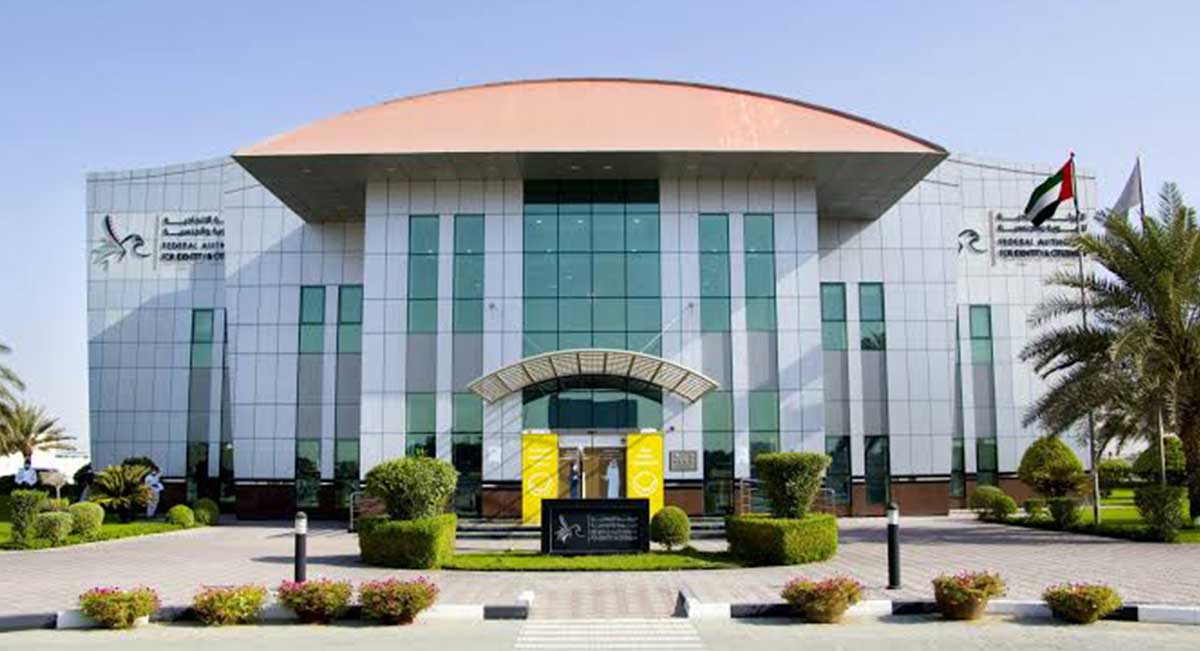
The UAE Federal Authority for Identity, Citizenship, Customs and Port Security (ICP) issued the requirement through an official notice circulated to free zone authorities and registered business setup firms.
The requirement was issued by the UAE Federal Authority for Identity, Citizenship, Customs and Port Security, universally known as ICP. ICP is the UAE's central authority for identity documents, residence visas, and border security, and its official visa issuance service page now lists a Good Conduct Certificate duly attested as required among the documents needed for applications falling within the announced categories. The ICP notice was circulated to free zone authorities and registered corporate service providers, which is how the information first reached the professional community in structured form.
The objective behind the requirement is straightforward: to strengthen security screening within the UAE immigration system and ensure that individuals entering the UAE workforce have been subject to a background verification process in their home country. The UAE has been systematically tightening its immigration compliance framework over the past several years, and this step fits within that broader direction. It is not targeted at any specific nationality in a punitive sense. The phased rollout across 45 countries reflects a practical sequencing of implementation rather than a ranking of concern.
What the ICP has not done is publish a single consolidated official press release listing all 45 countries and all three phase dates in one place. The information has been distributed through free zone authority notices, through updates to the ICP visa service portal, and through the professional network of PROs, immigration lawyers, and corporate service firms. the full phased list was first confirmed through ICP's official notices circulated to free zone authorities as it affected Filipino workers. For businesses managing visa applications at scale, this is one of the practical realities of UAE immigration: the official channels carry the rule, but the structured breakdown often reaches practitioners first through professional networks.
The Three Phases — Countries and Dates
Phase 1 started on 16 June 2026 and is already in effect. If you have pending visa applications for nationals from Phase 1 countries that were filed without a PCC, verify their status immediately with your PRO. Phase 2 starts on 15 August 2026. Given that obtaining, translating, and attesting a PCC takes 4 to 6 weeks minimum, applicants in Phase 2 countries who need to start work in the UAE in September or October 2026 need to begin the process now.
| Phase | Effective Date | Countries |
|---|---|---|
| Phase 1 | 16 June 2026 | Afghanistan, Algeria, Bhutan, Bulgaria, Cameroon, Cuba, Egypt, Ethiopia, Gambia, Ghana, India, Iraq, Lebanon, Lithuania, Mexico, Morocco, Mozambique, Nepal, Pakistan, Senegal, Somalia, Syria, Tonga |
| Phase 2 | 15 August 2026 | Albania, Bangladesh, Colombia, Cyprus, Fiji, Mauritius, Nigeria, Philippines, Sudan, Tunisia, Zimbabwe |
| Phase 3 | 15 November 2026 | Belarus, China, Georgia, Iran, Mauritania, Nicaragua, Rwanda, Serbia, Seychelles, Slovenia, South Africa |
Phase 1 — Effective 16 June 2026
The first phase is already in effect and covers the following nationalities: Afghanistan, Algeria, Bhutan, Bulgaria, Cameroon, Cuba, Egypt, Ethiopia, Gambia, Ghana, India, Iraq, Lebanon, Lithuania, Mexico, Morocco, Mozambique, Nepal, Pakistan, Senegal, Somalia, Syria, and Tonga. This is a wide group covering some of the largest expatriate communities in the UAE. India and Pakistan in particular represent two of the largest sources of skilled and semi-skilled labour in the country, which means Phase 1 has an immediate and widespread impact across the construction, hospitality, healthcare, and professional services sectors.
Phase 2 — Effective 15 August 2026
Phase 2 adds the following nationalities: Albania, Bangladesh, Colombia, Cyprus, Fiji, Mauritius, Nigeria, Philippines, Sudan, Tunisia, and Zimbabwe. The Philippines is the most significant addition from a volume perspective, given the size of the Filipino community in the UAE and the scale of employment across domestic, hospitality, healthcare, and retail sectors. Bangladesh also represents a large source of construction and industrial labour. UAE Ministry of Foreign Affairs attestation guidance notes that the list may expand as the ICP extends the phased rollout, and applicants should treat the current list as live guidance rather than a fixed permanent list.
Phase 3 — Effective 15 November 2026
The final phase covers: Belarus, China, Georgia, Iran, Mauritania, Nicaragua, Rwanda, Serbia, Seychelles, Slovenia, and South Africa. China is the most commercially significant addition in Phase 3 given the volume of Chinese business investment and entrepreneurial activity in the UAE. Seychelles is notable for its relevance to offshore company structures and the profile of Seychelles IBC shareholders who may be seeking UAE residence visas.
Visa Types Where PCC Is Required
- New employment visa applications
- New work entry permit applications
- New investor residence visa applications for affected nationalities
- New Golden Visa applications where ICP applies the requirement
- New Green Visa applications from affected nationalities
Visa Types Currently Exempt
- Tourist visas and short stay visit visas
- Student visas
- Dependent and family residence visas
- Renewals of existing residence permits (generally — verify with PRO)
- Overseas attestation for renewals — residents already in the UAE obtain a UAE-issued PCC via the Dubai Police App, MOI Smart App, or Amer Centres
Which Visa Types Are Affected
The current ICP guidance is specific on this point and it is worth understanding precisely rather than applying the requirement too broadly or too narrowly. ICP guidance confirms that the PCC requirement applies to new employment visa applications and new work entry permit applications. It does not currently apply to tourist visas, visit visas, student visas, or dependent and family residence visas. Short-stay visitors are not affected and can travel to the UAE as normal.
The situation for existing UAE residents is important to understand clearly: a Police Clearance Certificate is required for visa renewals from inside the UAE for all affected nationalities. However the process is considerably simpler than the overseas attestation route. Residents already in the UAE can obtain a UAE-issued Good Conduct Certificate directly through Dubai Police via the Dubai Police App or their official website, through the Ministry of Interior Smart App, or at Amer Centres and Tasheel service centres. The UAE-issued certificate is in Arabic and English, requires no translation, and no overseas attestation is needed. This makes the renewal process for current residents considerably faster than the initial overseas application route. Processing through the Dubai Police App typically takes 24 to 72 hours. The certificate can be downloaded digitally with a QR code for official verification. Rules vary by free zone, emirate, and employer, so confirming the specific requirements with your PRO or 1Stop Connect and its accredited partner before proceeding remains the safest approach.
For investor visas, Golden Visas, and Green Visas, the position is less clearly defined in the current public guidance. The ICP's general direction is that the requirement applies where a new entry permit or residence permit is being issued to a national of one of the listed countries. We advise treating investor visa applications from affected nationalities as subject to the PCC requirement until the ICP confirms otherwise, simply because the cost of having an application rejected or delayed is higher than the cost of preparing a document you may not ultimately need.
The Attestation Process — Steps and Timeline

The attestation chain for a Good Conduct Certificate involves multiple sequential steps. Skipping or reordering any step results in ICP rejection of the application.
The attestation process is where most delays happen and where most procedural errors occur. Understanding the correct sequence and the realistic timeline is critical to avoiding either of those outcomes. Here is the full process in the correct order:
Step 1: Obtain the PCC from the home country authority. The document must be issued by the competent police or government authority in the applicant's country of nationality. In India this is the passport office through the Ministry of External Affairs. In the Philippines it is the National Bureau of Investigation. In Pakistan it is the relevant district police authority with federal authentication. The time to obtain the certificate varies from 1 to 3 weeks depending on the country and the applicant's current location.
Step 2: Legal translation if required. If the PCC is not in Arabic or English, it must be translated by a certified legal translator before attestation. This step must happen before attestation, not after. Dubai Police's official PCC service documentation is emphatic on this point: the attestation seal covers the document as it exists at the time of stamping, and a translation added after attestation is not covered by that seal. ICP will reject such an application. Translate first, then attest.
Step 3: UAE Embassy or Consulate attestation in the home country. The translated PCC must be attested by the UAE Embassy or Consulate in the applicant's country of nationality. Note that the attestation country is not always the same as the nationality country. Bhutanese nationals must attest through the UAE Embassy in India. Gambian nationals must attest through the UAE Embassy in Senegal. Always verify the designated attestation country for your specific nationality before booking appointments.
Step 4: MOFA attestation in the UAE. Once the document has been UAE Embassy attested in the home country, it requires further attestation from the UAE Ministry of Foreign Affairs upon arrival in the UAE. This typically takes 3 to 7 working days.
Step 5: Submit with the visa application. The fully attested document is included in the employment visa or entry permit application file alongside the other required documents.
The realistic total timeline from starting the PCC process to having a fully attested document ready for visa submission is 4 to 6 weeks for a straightforward case. For countries where UAE Embassy appointment availability is limited or where the attestation must route through a third country, the process can take 8 weeks or longer. This is not a document you can obtain in a hurry when a hire date is already confirmed.
The One Mistake That Gets Applications Rejected
This single procedural error is responsible for a significant proportion of PCC-related visa application rejections. If you obtain your PCC, have it attested by the UAE Embassy, and then add a translation, the translation is not covered by the attestation seal. ICP will reject the application. The correct sequence is absolute: obtain PCC, then translate, then attest. In that order and no other. If your document is already in Arabic or English, skip the translation step entirely. If it is in any other language, translate it first before you book any embassy appointment.
There is one additional complexity that applicants from certain countries need to be aware of regarding the attestation routing. As confirmed by the UAE Ministry of Foreign Affairs attestation service, the UAE Embassy that must attest your PCC is not necessarily in your home country. The designated UAE Embassy for attestation purposes is determined by the UAE's diplomatic coverage in your region, and in some cases this means travelling to or couriering documents to a UAE Embassy in a neighbouring country. Research the correct attestation route for your specific nationality at the start of the process, not halfway through it.
What This Means for Employers and HR Teams
For businesses operating in the UAE that regularly hire from the affected countries, this change has direct and immediate operational consequences. The most obvious is that hiring timelines need to be extended. A candidate who was previously expected to be in the UAE and working within 3 to 4 weeks of an offer being accepted now needs 7 to 10 weeks if their PCC process has not already been started. For businesses with tight project start dates or seasonal staffing requirements, this timeline shift is significant.
The second consequence is communication with candidates. Many applicants from the affected countries are not yet aware that this requirement exists or that it applies to them. If your HR team or recruitment process does not inform candidates immediately upon offer acceptance that they need to begin the PCC process in their home country, weeks can pass before the issue surfaces. By then the start date is often already at risk.
The third consequence is for PRO teams and business setup advisors. Any visa application submitted for a national of an affected country without the attested PCC will be rejected at the ICP processing stage. The business setup and PRO community needs to be screening every new employment visa application for the nationality of the applicant and flagging PCC requirements before the file is prepared, not when it is returned. 1Stop Connect and its accredited program partner provides end-to-end residence visa support that includes exactly this kind of compliance screening as part of the standard process.
For free zone companies, the message from the ICP notice is the same regardless of which free zone you operate in. The requirement applies across all UAE free zones including DIFC, DMCC, JAFZA, ADGM, RAK ICC, and all others. Free zone status does not create an exemption from ICP's immigration requirements.
What to Do Right Now
The practical action list is straightforward and the sooner each item is completed, the better.
If you have any open employment visa applications or recruitment offers in progress for nationals of Phase 1 countries, check today whether a PCC is in the application file. If it is not, contact the applicant and the relevant authority in their home country immediately. Do not wait for the application to be rejected before acting.
If you have planned hires from Phase 2 countries starting in September or October 2026, inform the candidates now that they need to begin the PCC process in their home country. Based on the 4 to 6 week timeline, candidates who need to start work in September should ideally be starting the PCC process in July. The 15 August Phase 2 deadline means applications submitted after that date without a PCC will be rejected.
If you are an individual applicant from an affected country who is currently planning to apply for a UAE employment visa or work entry permit, start the PCC process before you do anything else. Do not assume your future employer will manage this for you. Obtain the certificate from your home country authority, arrange certified translation if your home country document is not in Arabic or English, and then arrange UAE Embassy attestation. Build at least 6 weeks into your plans.
If you are a company that uses a PRO service or business setup firm for your visa filings, confirm today that your provider is screening all new applications for the PCC requirement. If they are not, or if you are not certain, contact 1Stop Connect for a consultation. Getting this right from the start costs nothing compared to the delay and resubmission costs of getting it wrong.
"The businesses that lose out are never the ones who prepared too early. They are always the ones who assumed there was still time."
— Dr. Dieter Hovorka, PhDFrequently Asked Questions
What is a Good Conduct Certificate for UAE visa purposes? +
A Good Conduct Certificate, also called a Police Clearance Certificate (PCC), is an official document issued by the competent police or government authority in an applicant's country of nationality confirming that the person has no criminal convictions or pending criminal record. For UAE visa applications it must be issued in the home country and duly attested by the relevant UAE Embassy or Consulate before it is submitted as part of the visa file. 1Stop Connect and its accredited partner can advise on the full requirements for your specific nationality.
Which nationalities are affected and when? +
Phase 1 started 16 June 2026 and covers Afghanistan, Algeria, Bhutan, Bulgaria, Cameroon, Cuba, Egypt, Ethiopia, Gambia, Ghana, India, Iraq, Lebanon, Lithuania, Mexico, Morocco, Mozambique, Nepal, Pakistan, Senegal, Somalia, Syria and Tonga. Phase 2 starts 15 August 2026 and adds Bangladesh, Colombia, Cyprus, Fiji, Mauritius, Nigeria, Philippines, Sudan, Tunisia and Zimbabwe. Phase 3 starts 15 November 2026 and includes Belarus, China, Georgia, Iran, Mauritania, Nicaragua, Rwanda, Serbia, Seychelles, Slovenia and South Africa. The ICP may expand the list further as the rollout progresses.
Does the PCC requirement affect tourist or visit visas? +
No. Based on current ICP guidance the requirement applies to new employment visa applications and new work entry permit applications. Tourist visas, visit visas, student visas and dependent or family residence visas are not currently affected. Short-stay visitors from affected countries can continue to travel to the UAE as normal without a PCC.
What is the correct order for translation and attestation? +
The document must be translated before attestation, not after. The attestation seal authenticates the document as it exists at the time of stamping. If you add a translation after the UAE Embassy has already attested the original, the translation is not covered by the attestation and ICP will reject the application. The correct sequence is: obtain PCC from home country authority, translate into Arabic or English if required, submit for UAE Embassy or Consulate attestation, then complete MOFA attestation in the UAE.
How long does the full attestation process take? +
Budget at least 4 to 6 weeks from start to finish for a straightforward case. Obtaining the PCC from the home country authority takes 1 to 3 weeks. Legal translation adds 1 to 3 days. UAE Embassy attestation adds 1 to 2 weeks. MOFA attestation in the UAE adds 3 to 7 working days. For countries where attestation must route through a third country, the process can take 8 weeks or more. Starting early is not optional, it is the only reliable strategy.
Can 1Stop Connect help with the visa application including the PCC requirement? +
Yes. 1Stop Connect and its accredited program partner provides end-to-end residence visa and employment visa support including compliance screening for the PCC requirement, guidance on the attestation process for specific nationalities, and PRO services across the UAE. Contact us for a no-obligation consultation to understand exactly what is required for your specific situation and nationality.