
The question "where should I set up my e-commerce company?" has a frustrating but honest answer: it depends. It depends on where you live or plan to live, where your customers are concentrated, which payment processors your business model requires, what your revenue looks like now and where it is going, and how much administrative complexity you are willing to manage. What I can tell you with certainty is that the decision is not simply about finding the lowest tax rate. The era where a founder could incorporate in a zero-tax jurisdiction, live somewhere else entirely, and pay no tax anywhere is effectively over. OECD BEPS rules, economic substance requirements, and CRS information exchange have changed the landscape fundamentally.
What remains available, and what remains genuinely valuable, is choosing a jurisdiction that aligns your legal presence, your operational reality, your banking relationships, and your tax position into a coherent structure that works efficiently and durably. I have helped dozens of e-commerce founders and online retail businesses make this decision through 1Stop Connect's company formation services, and the patterns in what works and what fails are consistent enough to share in a guide.
- The Four Questions That Drive the Decision
- UAE Free Zones The Middle East and Global Founder's Base
- Singapore The Asia-Pacific Standard
- Hong Kong Gateway to China and Low-Tax Asia
- Ireland The EU's Digital Business Headquarters
- Estonia Digital-First, Low-Cost EU Access
- United Kingdom Credibility and Global Reach
- BVI The Holding Company Above the Operating Entity
- Side by Side: The Full Comparison
- The VAT Reality Every E-commerce Founder Must Understand
- Frequently Asked Questions
The Four Questions That Drive the Decision
Before comparing jurisdictions, four questions need clear answers. Every recommendation in this article is conditional on the answers to these four things.
Where do you live or plan to live? Economic substance requirements mean your company needs a genuine connection to its jurisdiction. If you are UAE resident, a UAE free zone company is straightforward and legitimate. If you live in Germany and incorporate in Dubai without actually being there, you are likely creating a tax problem at home rather than solving one abroad. Your personal tax residency and your company's jurisdiction need to align or have a defensible structural logic.
Where are your customers? If your customers are primarily in the EU, you have EU VAT obligations regardless of where you incorporate. If they are in the US, you have state sales tax obligations. A payment processor handles transaction processing but you are the seller of record responsible for tax compliance in each customer jurisdiction. Jurisdiction selection changes your corporate income tax position, not your customer-facing indirect tax obligations.
Which payment processors and platforms do you need? Stripe, PayPal, Shopify Payments, and most major gateways are available in the UAE, Singapore, Hong Kong, UK, Ireland, and Estonia. They are not available or are significantly restricted in many pure offshore jurisdictions. If your business model requires Stripe or PayPal, this rules out several low-cost offshore options immediately.
What is your revenue and growth trajectory? A founder at early-stage revenue has very different needs from one at scale. Setup costs, annual maintenance, substance requirements, and accounting complexity all scale differently. The cheapest-to-set-up jurisdiction is not always the cheapest to run, and the wrong structure is costly to unwind once the business has grown.
UAE Free Zones The Middle East and Global Founder's Base

The UAE free zone ecosystem offers over 40 options. DMCC, IFZA, SHAMS and Meydan are the most popular for e-commerce at varying cost and credibility levels.
The UAE is the strongest overall jurisdiction for e-commerce founders who are, or are willing to become, UAE resident. UAE free zones offer 0% tax on qualifying income, residency options, and growing banking infrastructure. Stripe and PayPal both operate fully in the UAE. Emirates NBD, Mashreq, RAKBank, and ADCB all support international e-commerce businesses with multi-currency accounts, payment gateway integrations, and international wire capabilities.
The UAE's appeal for e-commerce goes beyond the tax rate. The UAE sits in a time zone that overlaps with Europe in the morning and Asia in the afternoon. It has one of the best-connected logistics hubs in the world through Dubai International Airport and Jebel Ali Port. For businesses that combine digital sales with physical product fulfilment, the UAE's logistics infrastructure is a genuine operational advantage. For businesses that are purely digital SaaS, subscriptions, downloadable products the UAE's banking and payment infrastructure supports the model completely.
Free zone selection matters. DMCC (Dubai Multi Commodities Centre) is the largest and most established, with excellent banking relationships and high international credibility but is the premium option with the strongest banking track record. IFZA offers comparable access at a more accessible price point. SHAMS (Sharjah Media City) and Meydan Free Zone are among the most affordable options, though banking relationships can be slightly more challenging to establish. 1Stop Connect's free zone advisory service matches founders to the right free zone based on their specific business model, budget, and banking requirements rather than a generic recommendation.
The UAE introduced 9% federal corporate tax in June 2023, with an AED 375,000 (approximately USD 102,000) threshold below which the rate is 0%. Free zone companies with qualifying income and genuine economic substance may benefit from 0% on qualifying income. This is not automatic the substance requirements are real and must be met.
Singapore The Asia-Pacific Standard

Singapore remains the gold standard for Asia-Pacific e-commerce operations excellent banking, full payment processor access, and a territorial tax system with generous startup exemptions.
Singapore is the default recommendation for e-commerce businesses targeting Asia-Pacific markets and for founders who want the combination of low effective tax, excellent banking, and high institutional credibility. Singapore and Hong Kong lead for businesses needing credibility, banking, and treaty access in Asia. Stripe, PayPal, Shopify Payments, and every major payment gateway is fully available. DBS, OCBC, and UOB all serve international e-commerce businesses with sophisticated multi-currency accounts.
Singapore's corporate tax rate is 17%, but the effective rate for qualifying startups on the first SGD 200,000 of taxable income is approximately 4.25% under the Startup Tax Exemption scheme for the first three years. After the startup exemption period, partial exemptions reduce the effective rate on the first SGD 200,000 of income to approximately 8.5%. Singapore operates on a territorial tax system, meaning income earned outside Singapore by a Singapore company is generally not taxed in Singapore, which is particularly advantageous for businesses with a global customer base.
The practical limitation of Singapore is cost and substance. Setup costs are competitive, but annual maintenance including a local director if you are not Singapore resident, registered address, company secretary, and accounting adds meaningful ongoing cost. Singapore requires at least one locally resident director, which means either relocating there or appointing a nominee director, adding ongoing cost and governance complexity.
Hong Kong Gateway to China and Low-Tax Asia

Hong Kong remains the most practical gateway for e-commerce businesses with a China or Greater Asia focus, with access to Alipay and WeChat Pay that other jurisdictions cannot easily replicate.
Hong Kong's two-tier corporate tax system offers 8.25% on the first HKD 2 million of profits and 16.5% above that. For e-commerce businesses with offshore income revenue from customers outside Hong Kong the rate is 0% on that offshore portion under Hong Kong's territorial tax principle, provided the income genuinely arises offshore and proper substance is maintained. Hong Kong suits trading companies, import-export, financial services, China market entry, and holding structures.
For e-commerce businesses selling into mainland China or operating cross-border between Greater China and the rest of the world, Hong Kong remains the most practical gateway. Chinese payment systems including Alipay and WeChat Pay are accessible through Hong Kong entities in ways that are not easily replicated from other jurisdictions. Banking at HSBC Hong Kong, Standard Chartered, and Bank of China (HK) is strong, though onboarding has become more rigorous since 2019 and founders should expect 4 to 8 weeks for account setup.
The current geopolitical context around Hong Kong creates some uncertainty that was not present five years ago. For businesses with no specific China angle, Singapore generally presents a cleaner option with less reputational uncertainty. For businesses where China market access is central, Hong Kong remains difficult to replace.
Ireland The EU's Digital Business Headquarters

Ireland offers the EU's most competitive trading tax rate, English law, full EU market access and strong banking for digital businesses.
If your e-commerce business is primarily selling to EU customers and you want to be based within the EU, Ireland is the most commercially attractive option. The 12.5% trading company rate is the lowest in the EU for active businesses, and Ireland provides full access to the EU single market with English as the working language, a common law legal system, and a very mature ecosystem of accountants, lawyers, and banking relationships familiar with international e-commerce structures.
Stripe was founded by Irish founders and maintains significant operations in Ireland. PayPal's European headquarters is in Luxembourg but its Irish operations are substantial. Ireland's Revenue authority has well-documented guidance on e-commerce VAT obligations, which is particularly useful for businesses selling digital goods to EU consumers and needing to navigate the One-Stop-Shop VAT scheme.
Ireland requires genuine substance real employees, real management decisions made on Irish soil, a real office. The Apple tax ruling history demonstrates that the Irish authorities and the EU Commission take substance requirements seriously. For a founder who wants to be EU-based, Ireland is the strongest option. For a founder who wants to incorporate in Ireland while living in another EU country, the substance requirements make the structure problematic.
Estonia Digital-First, Low-Cost EU Access

Estonia's e-Residency card allows any founder anywhere in the world to establish and manage an EU-compliant company entirely online, making it the lowest-friction EU setup available.
Estonia's e-Residency programme allows non-residents to establish a company in Estonia entirely online, with no requirement to be physically present for incorporation. The corporate tax rate is effectively 0% on retained profits Estonia revolutionizes digital business with e-residency programs built on the principle of only taxing profits when they are distributed. As long as profits stay in the company and are reinvested, no corporate tax is due.
For solo founders and small digital e-commerce businesses wanting an EU company with minimal administrative burden, Estonia is genuinely compelling. Setup can be completed entirely remotely at minimal cost. Annual accounting and compliance through Estonian service providers is modest. The Estonian e-Residency programme is freely accessible and well-documented. Stripe is fully available for Estonian companies. VAT registration is mandatory once you exceed the EU OSS thresholds for digital goods sales to EU consumers.
The limitation is banking. Physical Estonian banks such as LHV and Coop Bank serve Estonian companies but require either a genuine connection to Estonia or acceptance of stricter KYC requirements for non-resident founders. Estonia is best for solo founders and digital businesses wanting a low-cost EU-compliant entity. For businesses with significant revenue, complex banking needs, or physical inventory, the banking constraints eventually become a practical bottleneck.
United Kingdom Credibility and Global Reach

The UK combines fast company registration, immediate payment processor access, and strong global credibility, making it one of the most practical options for founders targeting English-speaking markets.
The UK corporate tax rate ranges from 19% for smaller profits up to 25% for larger companies, but provides something that lower-tax jurisdictions often cannot: immediate credibility with customers, suppliers, and payment processors globally. UK and Ireland dominate for credibility, especially in fintech and SaaS. US-registered companies seem safer to American buyers. UK-registered companies gain UK and Commonwealth trust.
For e-commerce businesses selling to UK consumers, a UK company simplifies VAT registration, banking, and customer trust simultaneously. Companies House registration is fast and low-cost. Stripe, PayPal, and every other major payment processor operates without restriction in the UK. Lloyds, Barclays, HSBC, Starling, and Monzo all open business accounts for UK companies with varying degrees of friction.
Post-Brexit, a UK company no longer provides EU single market access. Businesses selling into the EU from a UK entity face import VAT and customs declaration requirements on physical goods. For digital goods, EU VAT obligations apply through the non-Union OSS scheme regardless of UK incorporation. For businesses where EU physical goods trade is significant, a UK company may need to be paired with an EU entity or a fiscal representative in an EU member state.
BVI The Holding Company Above the Operating Entity
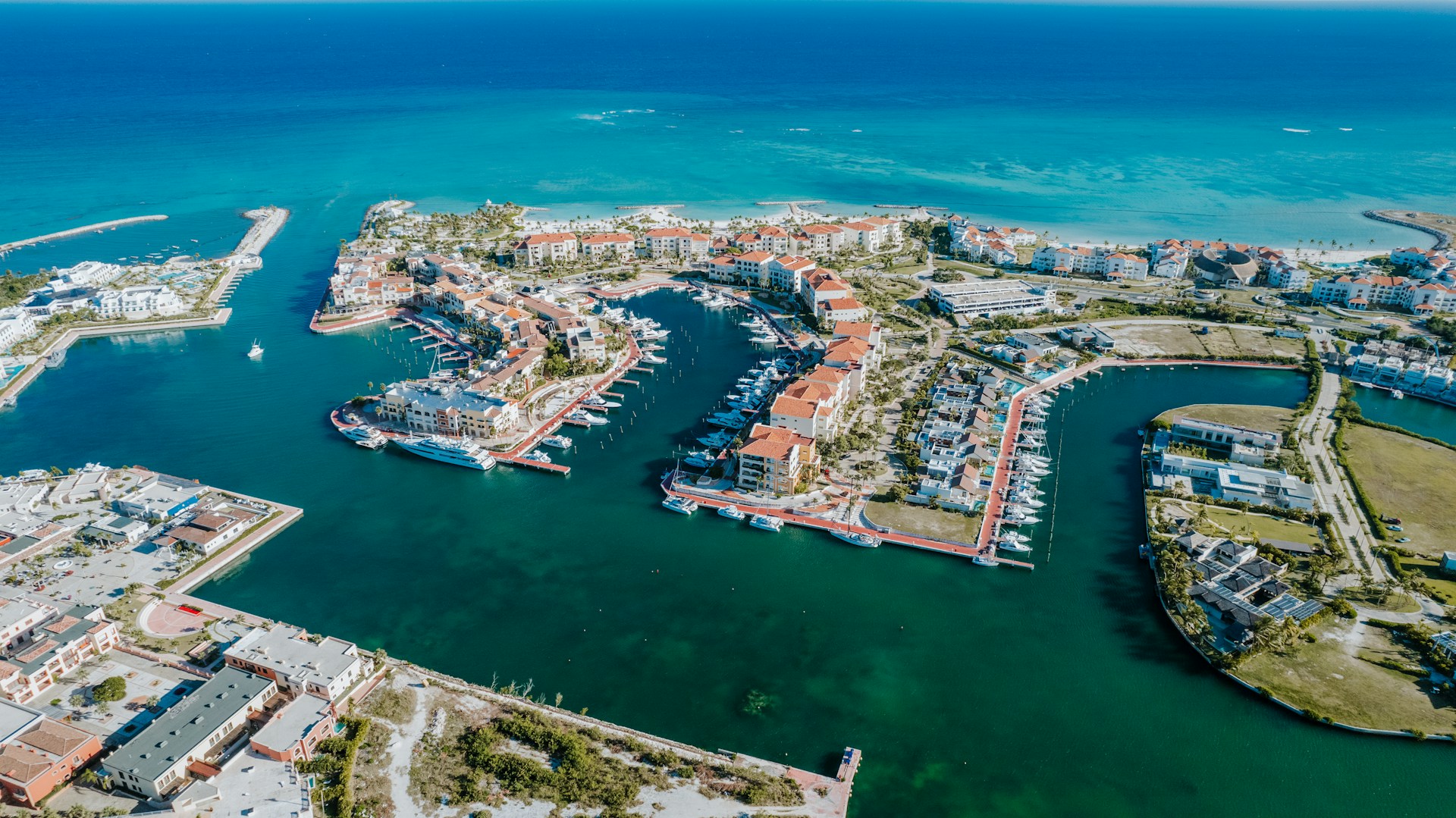
BVI works as a holding layer above an active operating entity, not as a standalone e-commerce vehicle. Payment processors do not support BVI entities directly.
The British Virgin Islands is rarely the right jurisdiction for an operating e-commerce business as a standalone structure in 2026. Payment processor access is limited Stripe does not support BVI entities directly and PayPal access is restricted. Banking for BVI companies has become significantly more difficult as major banks have derisked from small-island jurisdictions. BVI offers 0% tax and strong privacy but banking access can be challenging.
Where BVI remains relevant for e-commerce founders is as a holding company above an operating entity. A BVI company holding shares in a UAE free zone operating company, or a Singapore operating company, provides ownership privacy and structural flexibility that the operating entity alone does not. The BVI entity does not need to open its own bank account or accept payments it simply holds shares and receives dividends. This structure is particularly common for founders who want to separate their personal ownership from the operating entity's public profile.
Note that as covered in our article on beneficial ownership registers, BVI's 2026 amendments have introduced legitimate interest access to ownership information, meaning BVI is no longer the absolute privacy jurisdiction it once was.
Side by Side: The Full Comparison
| Jurisdiction | Corp. Tax Rate | Stripe / PayPal | Banking | EU VAT | Best For |
|---|---|---|---|---|---|
| 🇦🇪 UAE Free Zone | 0% qualifying / 9% federal | Full access | Excellent | Non-Union OSS if selling to EU | Middle East, global, UAE-resident founders |
| 🇸🇬 Singapore | ~4.25% (startup) / 17% standard | Full access | Excellent | Non-Union OSS | Asia-Pacific, China-adjacent, credibility |
| 🇭🇰 Hong Kong | 8.25% (first HKD 2m) / 16.5% | Full access | Good slower KYC | Non-Union OSS | China market, Greater Asia |
| 🇮🇪 Ireland | 12.5% trading | Full access | Excellent | Union OSS EU registered | EU-facing, digital goods, SaaS |
| 🇪🇪 Estonia | 0% retained / 20% distributed | Full access | Limited LHV / Coop | Union OSS EU registered | Solo founders, digital products, low cost |
| 🇬🇧 United Kingdom | 19% (small) – 25% (large) | Full access | Excellent | Non-Union OSS (post-Brexit) | UK market, global credibility, low-cost setup |
| 🇻🇬 BVI | 0% | Not supported | Very difficult | Non-Union OSS | Holding company only not for operating |
The VAT Reality Every E-commerce Founder Must Understand
VAT and sales tax compliance follows the customer, not the company. Selling digital goods to EU consumers triggers VAT obligations regardless of where your company is incorporated.
The most common misconception among e-commerce founders choosing a jurisdiction is that incorporating in a low-tax country eliminates their tax obligations. It does not. It changes where your corporate profits are taxed. It does not change where your customer-facing indirect tax obligations arise.
If you sell digital goods or services to consumers in the EU, you must collect EU VAT at the applicable rate in each customer's country, and remit it either through the Union OSS scheme (if you are EU-incorporated) or the Non-Union OSS scheme (if you are incorporated outside the EU). This applies from the first euro of sales to EU consumers with no de minimis threshold for digital goods since 2021. In the EU, digital products are subject to VAT regardless of how trivial the transaction amount.
If you sell physical goods to UK consumers above £90,000 annually, UK VAT registration is required. If you sell into the US, economic nexus thresholds in most states trigger sales tax collection obligations once you reach USD 100,000 in annual sales or 200 transactions in that state. In the US, most states require sales tax on digital goods and there are more than 11,000 separate tax jurisdictions.
The practical solution for most internationally selling e-commerce businesses is a combination of the right corporate jurisdiction for profit tax efficiency, and a dedicated tax compliance tool for indirect taxes. Stripe Tax handles automated VAT and sales tax calculation across 50 countries and integrates directly into Stripe payments. Avalara and Quaderno are the leading alternatives for multi-processor businesses. None of this eliminates the obligation it automates the compliance.
Getting the corporate structure right from the start is considerably cheaper than unwinding the wrong one. Contact 1Stop Connect and its accredited program partner for a consultation before committing to a jurisdiction, particularly if your business model involves significant EU or US sales volumes alongside offshore incorporation. The combination of corporate structure and indirect tax compliance needs to be designed together, not sequentially.
"The era of simplistic zero-tax decisions is over. True advantage in 2026 comes from combining tax efficiency with legal credibility, compliance certainty, and banking access. Any two of those three is not enough."
— Dr. Dieter Hovorka, PhDFrequently Asked Questions
Which jurisdiction is best for e-commerce in 2026? +
There is no single best jurisdiction. For founders who are UAE residents or willing to relocate, UAE free zones offer 0% corporate tax on qualifying income, excellent banking, and full Stripe and PayPal support. For EU-facing businesses, Ireland or Estonia are the most practical options. For Asia-Pacific businesses, Singapore and Hong Kong remain the strongest choices. A BVI holding company above a UAE or Singapore operating entity is a common structure for internationally mobile founders. 1Stop Connect and its accredited partner provides jurisdiction selection advisory as part of the formation process.
Can a UAE free zone company accept payments via Stripe and PayPal? +
Yes. UAE free zone companies can open Stripe accounts and accept PayPal payments. The UAE is one of the strongest jurisdictions globally for payment processor access. Emirates NBD, Mashreq, RAKBank and most UAE banks support international payment gateway integrations. DMCC, Dubai Internet City, and IFZA have particularly well-developed e-commerce licensing categories.
Does an offshore e-commerce company need to register for VAT? +
Selling to EU consumers triggers EU VAT obligations regardless of where your company is incorporated. Selling to UK consumers above £90,000 requires UK VAT registration. Selling to US consumers triggers state-level sales tax at economic nexus thresholds. Offshore incorporation changes where your corporate profits are taxed, not where your customer-facing indirect tax obligations arise.
What is economic substance and does it affect e-commerce companies? +
Economic substance requirements mean your company must have a genuine presence in its jurisdiction not just a registered address. For UAE free zone companies carrying on e-commerce activity, this means real management and control being exercised in the UAE, and the company meeting applicable substance criteria. Singapore and Hong Kong have always required genuine local presence for tax treaty and territorial tax benefits. Substance requirements have eliminated the model of incorporating in a zero-tax jurisdiction while living and operating entirely elsewhere.
How much does it cost to set up an e-commerce company in a UAE free zone? +
Total first-year cost for a UAE free zone e-commerce company including licence, residence visa, and bank account setup typically ranges from a range that depends on the free zone and number of visas. SHAMS and Meydan are the most affordable options. IFZA sits at a mid-range price point. DMCC is the premium option. 1Stop Connect can provide a detailed cost breakdown for the free zone and structure that best fits your business model.